In this article8 sections
A DSCR loan (debt service coverage ratio loan) is an investor mortgage for rental property that qualifies on whether the property's rent covers its monthly payment, taxes, insurance, and dues, not on your personal income. No W2 stubs, no tax returns, no DTI calculations on your day-job paycheck. The pitch is simple, the marketing is loud, and the actual mechanics are more boring than any DSCR lender's homepage suggests. This article walks through how a DSCR rental loan actually works, the qualifying math, the rate spread you pay for the convenience, and the prepayment traps that loud lender content tends to skip.
This article is for first-time U.S. investors comparing DSCR against conventional financing. Real Estate Explained publishes this site and sells the 28-day course mentioned at the end. If you've watched a YouTube ad promising "no W2 required" and wondered what the catch is, you're in the right place. The honest answer is the catch is real (rate spread, prepayment penalties, balloon clauses), but DSCR rental loans are a legitimate tool when conventional doesn't fit your situation.
Key Takeaways
- DSCR = monthly rent ÷ monthly PITIA. Many lenders approve at 1.0. A ratio of 1.25+ is where pricing usually improves.
- No W2 or tax returns required. Lenders qualify on the property's cashflow, not yours.
- Rate premium is real. DSCR loans typically price 0.75-1.5% above conventional investment rates.
- Prepayment penalties are common. Many DSCR loans carry 3-5 year prepayment penalties (1-5% of the loan).
- DSCR isn't a free pass. Credit score, down payment (20-25%), and reserves still matter.
- Rentals only. A home you'll live in, including a house hack, needs a different loan.
What is a DSCR loan?
A DSCR loan (debt service coverage ratio loan), sometimes called a DSCR rental loan or DSCR rental property loan, is a non-qualified mortgage (non-QM) for investment property purchases or refinances. The lender qualifies the loan based on whether the property's rent covers the loan payment plus taxes, insurance, and association dues, rather than on the borrower's personal income, employment status, or tax returns.
Why can a lender skip your income? According to the CFPB's official interpretation of Regulation Z (comment 3(a)-4), credit to buy, improve, or maintain a rental property that isn't owner-occupied "is deemed to be for business purposes." Business-purpose credit sits outside Regulation Z's ability-to-repay income checks. That's also why the same loan isn't available for a house you live in.
The product exists because of three structural realities in U.S. real estate:
- Self-employed borrowers often have W2 income that doesn't reflect actual cashflow (because of write-offs).
- Conventional loans cap you at 10 financed properties per Fannie Mae's Selling Guide rule on multiple financed properties (Desktop Underwriter loans, effective November 5, 2025). Investors scaling beyond that need a non-QM path.
- Conventional underwriting time can stretch 30-45 days. DSCR lenders often close in 21-30 days.
DSCR loans are issued by non-bank lenders (Kiavi, Lima One, Visio, Velocity, etc.) and a handful of banks. They are NOT Fannie Mae or Freddie Mac loans, which means they don't have to follow conforming rules.
How is DSCR calculated for a rental property?
The math is simple:
DSCR = Gross Monthly Rent ÷ Monthly PITIA
Where:
- PITIA = Principal + Interest + Taxes + Insurance + HOA/Association dues
- Gross Monthly Rent = the rent the property collects (or for short-term rentals, projected average)
A DSCR of 1.0 means rent exactly covers the loan payment plus taxes, insurance, and HOA.
A DSCR of 1.25 means rent covers the loan plus a 25% margin. Many lenders start their standard pricing here.
A DSCR of 1.5+ generally gets the best rates and the highest LTV (loan-to-value, the share of the price the lender funds).
Worked example:
- Property rents for $2,400/month
- PITIA: $1,800/month (P&I $1,400 + taxes $200 + insurance $100 + HOA $100)
- DSCR = $2,400 ÷ $1,800 = 1.33
DSCR of 1.33 qualifies easily. The same property at $2,200 rent and $1,800 PITIA would have DSCR of 1.22: above a 1.0 floor, but short of the 1.25 tier, so expect a higher rate or a bigger down payment.
Where does the rent number come from?
On a purchase there's usually no lease, so an appraiser estimates market rent. For conventional loans, Fannie Mae's rental income guidance lets lenders document rent with the appraisal or the Single-Family Comparable Rent Schedule (Form 1007), if neither is dated 12 months or more before the note date. Many DSCR lenders order the same form. Ask which figure they'll count. A $150 lower rent estimate can push a 1.30 deal under 1.25.
Why is a 1.25 DSCR thinner than it sounds?
The ratio uses gross rent. It ignores vacancy, repairs, and management, which net operating income subtracts. So a rental at 1.25 can still lose money in a month with a vacancy or a furnace replacement. Qualifying and cashflowing are two different tests.
What do you need to qualify for a DSCR loan?
DSCR isn't free. Beyond the ratio itself, lenders care about:
Down payment: 20-25% minimum, similar to conventional. Some lenders go to 15% with stricter ratio requirements.
Credit score: 660 minimum. Best rates at 740+. The credit score and DSCR ratio together determine your final rate and LTV.
Property type: single-family rentals are most common. 2-4 unit properties qualify. Condos work but with stricter project review. Short-term rental properties (Airbnb, VRBO) are increasingly accepted but with conservative income assumptions.
Cash reserves: typically 3-6 months of PITIA. Some lenders waive reserves for stronger ratios. The lender's minimum isn't a safe cushion, so see how much cash reserves a rental needs.
LLC vesting: most DSCR lenders allow you to close in an LLC, which is a meaningful advantage over conventional loans (which require closing in your personal name and then transferring after).
What you don't need:
- W2 or pay stubs
- Tax returns (in most cases)
- Employment verification
- Personal DTI calculation
This is the actual selling point. For investors with messy tax returns or no W2, this matters enormously. You still need cash, though: the First Deal Cash Planner totals down payment, closing costs, and reserves for a specific price.
DSCR loan vs conventional investment loan
| DSCR loan | Conventional investment loan | |
|---|---|---|
| Qualifies on | Property rent vs PITIA | Your income, DTI, and tax returns |
| Income documents | Usually none | W2s, pay stubs, tax returns |
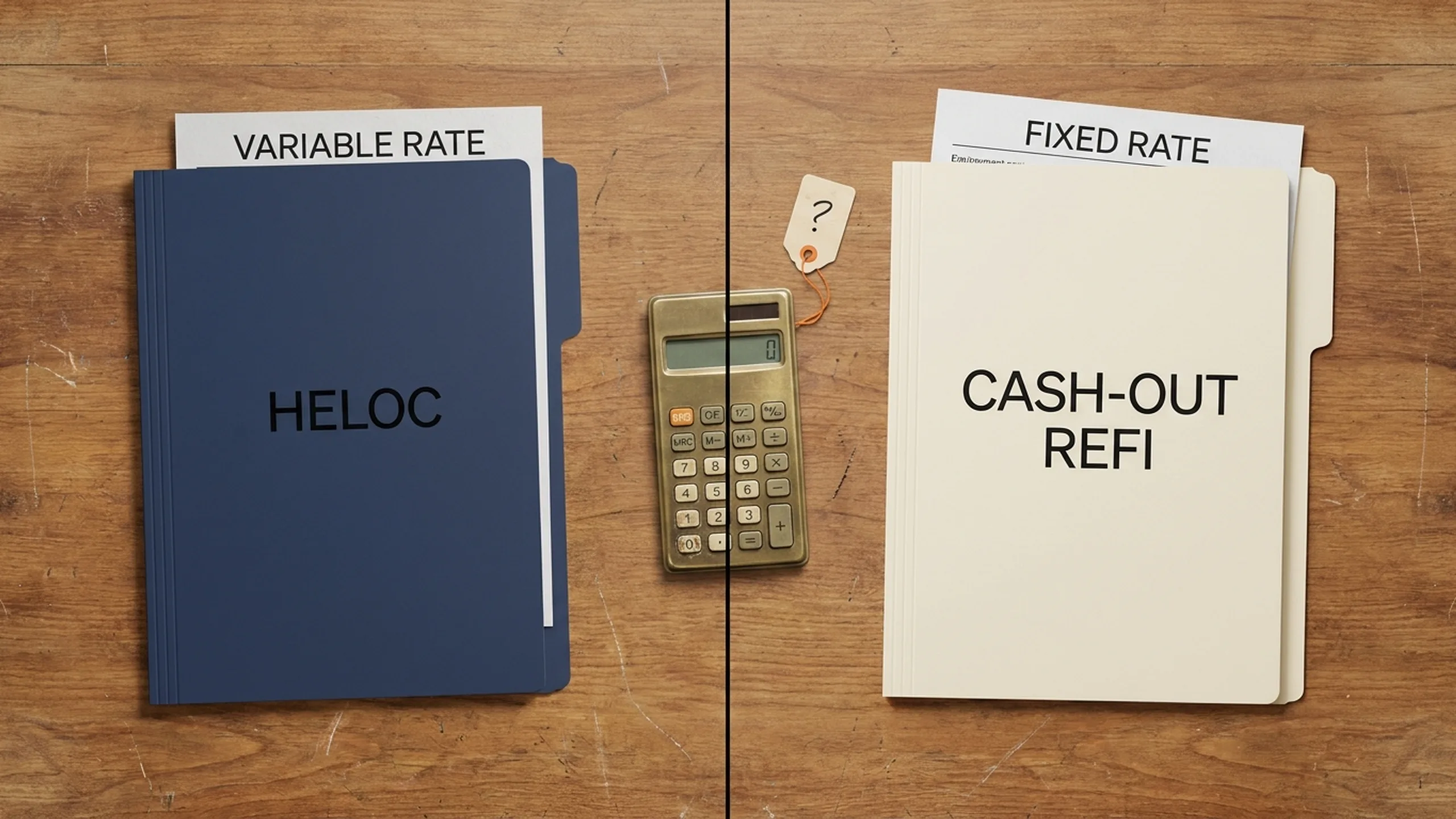
| Rate | Typically 0.75-1.5% higher | Baseline investment pricing |
| Prepayment penalty | Common, 3-5 years | Generally none |
| Financed-property limit | Set by each lender | 10 (Fannie Mae, Desktop Underwriter) |
| Title in an LLC | Usually allowed | Personal name at closing |
| Home you live in | Not allowed | Allowed under owner-occupied programs |
Rate spread vs conventional
DSCR convenience comes with a rate premium.
According to Freddie Mac's Primary Mortgage Market Survey on FRED, the 30-year fixed rate averaged 6.76% in the week ending September 10, 2026. That's a primary-residence benchmark. Investment-property conventional loans typically price 0.5-0.75 points above that primary rate. DSCR loans on the same properties typically price another 0.75-1.5% above the conventional investment rate, depending on credit, ratio, and lender.
The spread is real and worth quantifying. On a $200,000 loan, at illustrative rates:
- Conventional investment at 7.25%: P&I = $1,364/month
- DSCR at 8.25%: P&I = $1,502/month
- Difference: $138/month, or $1,656/year
Over a 5-year hold, that's $8,280 in higher payments. Over 10 years (assuming you don't refinance), it's roughly $16,000.
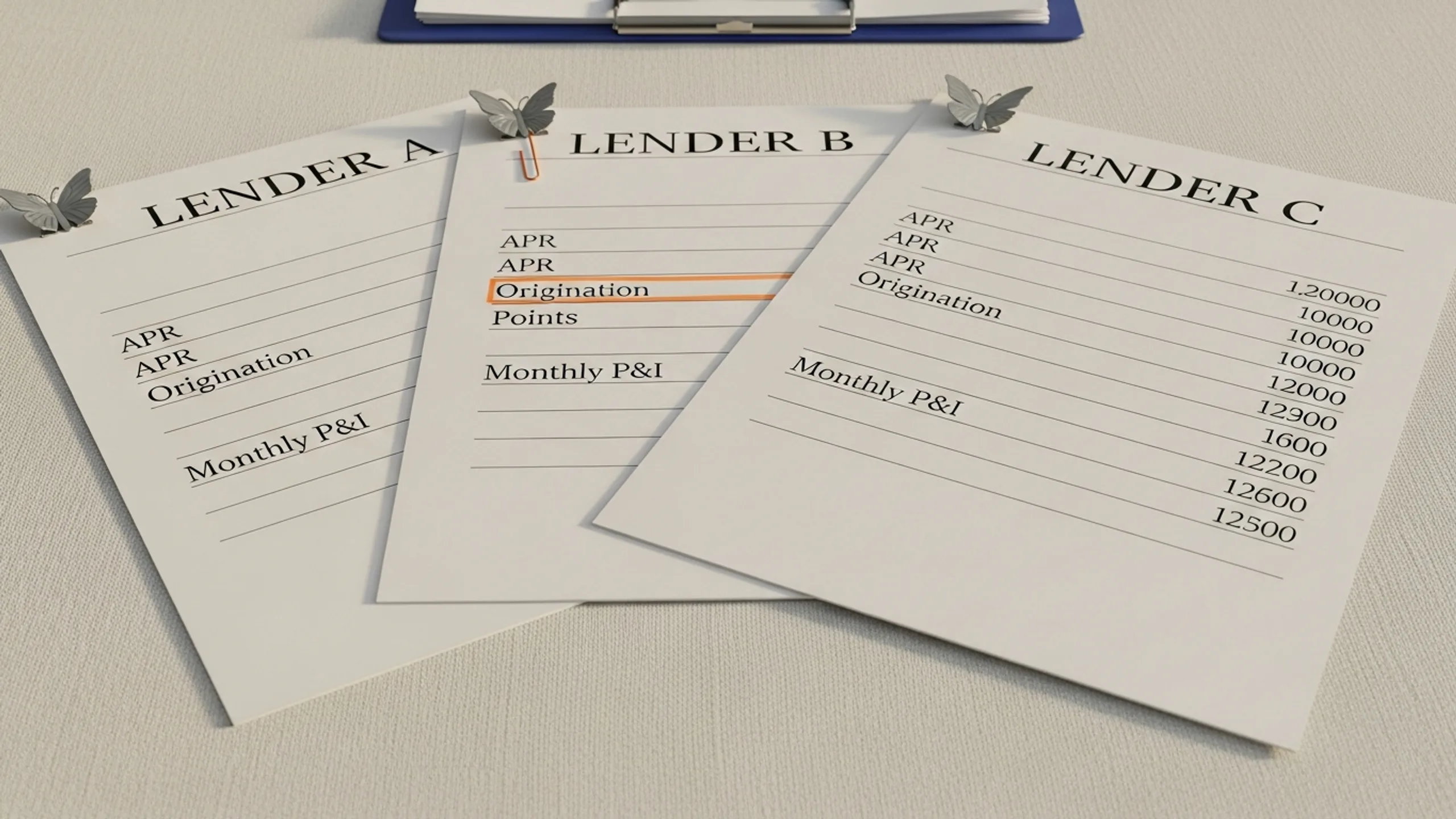
The trade-off is: do you have $8,000-$16,000 worth of "I can't qualify conventionally" pain? For genuinely self-employed investors with multiple write-offs, yes. For W2 employees with clean tax returns, the answer is almost always no. If you do go DSCR, compare term sheets from at least three lenders on rate, points, and prepayment terms together.
Prepayment penalties and balloon clauses
Two structural features of DSCR loans that loud marketing often skips:
Prepayment penalties. Many DSCR loans carry 3-5 year prepayment penalties. Common structures:
- Step-down: 5/4/3/2/1% of the loan balance, declining each year
- Yield maintenance: you pay the lender's missed interest if you refinance early
If you're planning to refinance into a conventional loan after stabilizing the property (a common BRRRR exit), the prepayment penalty can erase your savings. Read the loan documents before closing.
Balloon clauses. Some DSCR products are structured as 30/30 (fully amortizing 30-year). Others are 30/5, 30/7, or interest-only with balloons. A 30/5 balloon means you have a 30-year amortization but the entire balance becomes due at year 5. If rates rise or your property value drops, you face refinance pressure.
Confirm the loan structure before you sign. "Standard 30-year fixed DSCR loan" should mean fully amortizing. If it doesn't, the lender owes you a clear explanation.
When DSCR makes sense vs when conventional is better
DSCR fits when:
- You're self-employed with significant tax write-offs
- You've hit the 10-property Fannie Mae cap on conventional loans
- You need to close in an LLC from day one
- You need to close fast (21-30 days vs 30-45 conventional)
- Your property's cashflow is strong but your personal DTI doesn't pass conventional underwriting
Conventional fits better when:
- You have W2 income with 2+ years of stable history
- Your tax returns reflect your actual income
- You're under the 10-property cap
- You can wait 30-45 days for closing
- You'd rather save $1,000-$2,000/year in interest than gain processing speed
DSCR doesn't apply when you'll live in the property. Owner-occupied homes fall outside the business-purpose treatment, so compare FHA vs conventional for house hacking instead. And if rent won't clear 1.0, that's usually a deal problem, not a loan problem.
For most first-time investors, conventional is the right starting point. DSCR becomes the right tool around property 3-5, when conventional underwriting starts getting tedious. See how to finance a rental property for the full path comparison.
For deal-level math under either loan, see how to calculate cap rate. The first-time investor mistakes pillar names mistake #5 (underestimating expenses) which is even more painful at DSCR rates. And since a DSCR rental loan still runs through a normal closing, see closing costs for investment property for what to budget beyond the rate.
Frequently Asked Questions
What is a good DSCR ratio for a rental property?
A DSCR of 1.25 or higher is a good target, because it's where many lenders start standard pricing (rent covers the payment plus a 25% margin). Strong properties run 1.40+. A DSCR of 1.0 means the rent exactly covers the payment with no margin, which lenders treat as risky. Below 1.0 the property doesn't cover its own payment.
What's the minimum DSCR for a loan?
Different lenders have different floors. Many approve at 1.0, often with a higher down payment (25-30%) or higher credit (740+), and save their best rates for 1.25 and above. A handful of no-ratio DSCR products accept lower ratios, but at significantly higher rates and lower LTV.
Can you get a DSCR loan for an Airbnb?
Often, yes. Many DSCR lenders accept short-term rentals, but they size the income conservatively rather than taking your best-case booking projection. Ask exactly how they'll count the income before you apply. Then run the deal at long-term rent too, so a slow season can't push your ratio below the lender's floor.
Can a beginner get a DSCR loan?
Yes. DSCR loans don't require investment-property experience. The lender's underwriting focuses on the property's cashflow and your credit, not your track record. Beginners typically get DSCR loans at slightly higher rates than experienced investors with the same credit, but the difference is small (0.125-0.25%).
Do DSCR loans require a down payment?
Yes. 20-25% minimum, sometimes 15% with stronger DSCR ratios and credit. The no-income-required claim refers only to qualifying. You still need real cash for the down payment, closing costs, and reserves. The total upfront capital for a $250,000 DSCR-financed rental is typically $60,000-$80,000.
Are DSCR loan rates higher than conventional?
Yes, typically 0.75-1.5% higher than conventional investment rates. On a $200,000 loan, that's roughly $100-$210 more per month, or $1,250-$2,500 a year. The premium pays for the no-W2 underwriting, faster close, and LLC vesting. For W2 employees with clean tax returns, the premium usually outweighs the convenience.
Can I refinance a DSCR loan into a conventional loan?
Yes, but watch the prepayment penalty. If your DSCR loan has a 3-year step-down prepay (5/4/3%), refinancing in year 1 costs 5% of the loan balance. Many investors plan a DSCR-to-conventional refinance after the prepay window expires. Confirm the prepay terms before signing the original DSCR.
Can you use a DSCR loan on a home you live in?
No. DSCR loans are for rentals you don't occupy. Federal lending rules treat credit for a non-owner-occupied rental as business-purpose, which is what lets lenders skip income checks. If you plan to live in one unit of a duplex, look at FHA or conventional owner-occupied loans instead.
DSCR loans are a real tool for the right situation. They are not a magic bypass for the actual capital, credit, and reserve requirements of investment property financing. If you're a W2 employee with clean returns and capital, conventional is almost always cheaper. If you're self-employed or scaling beyond 10 properties, DSCR earns its premium. The free DSCR loan calculator runs your ratio before you call a lender. The 28-day course walks through the lender-shopping process for both paths in week 3.
This article is education, not financial, legal, or tax advice. Real estate carries risk, and the numbers here are examples. Check them against your own market and talk to a licensed professional before you buy.