
In this article9 sections
If you're house hacking your first property, the loan you pick shapes everything: how much you put down, how strict the credit bar is, how much rent counts toward qualifying, and what happens to your monthly payment over time. The two real options for owner-occupied 2-4 unit properties are FHA and conventional. Most beginners pick FHA without realizing conventional has been a real contender since Fannie Mae cut the down payment on owner-occupied 2-4 unit homes to 5% in November 2023. This guide walks through the five differences that actually matter, with the 2026 loan limits and current rates, and gives you a clear answer for each common scenario.
House hacking means buying a small residential property with an owner-occupied loan, living in one unit, and renting out the rest so tenant income covers part of your housing cost.
This article is for first-time investors who already understand the basic idea of house hacking and now need to choose a loan product. If you're brand new to the concept, start with house hacking for beginners and come back here once you're ready to underwrite.
Key Takeaways
- FHA: 3.5% down on 1-4 units, credit score minimum 580, annual mortgage insurance of 0.55% for the life of the loan at that down payment.
- Conventional: 5% down on owner-occupied 2-4 units (Fannie Mae, since November 2023), credit score minimum usually 620-680, PMI removable once you reach 20% equity.
- Both require you to live in one unit for at least 12 months and let you count 75% of the rent from the other units toward qualifying.
- The biggest cost difference is the insurance. On a $400,000 duplex, FHA insurance runs about $180 a month for as long as you keep the loan; conventional PMI runs $150-200 a month and then falls off.
The decision in one paragraph
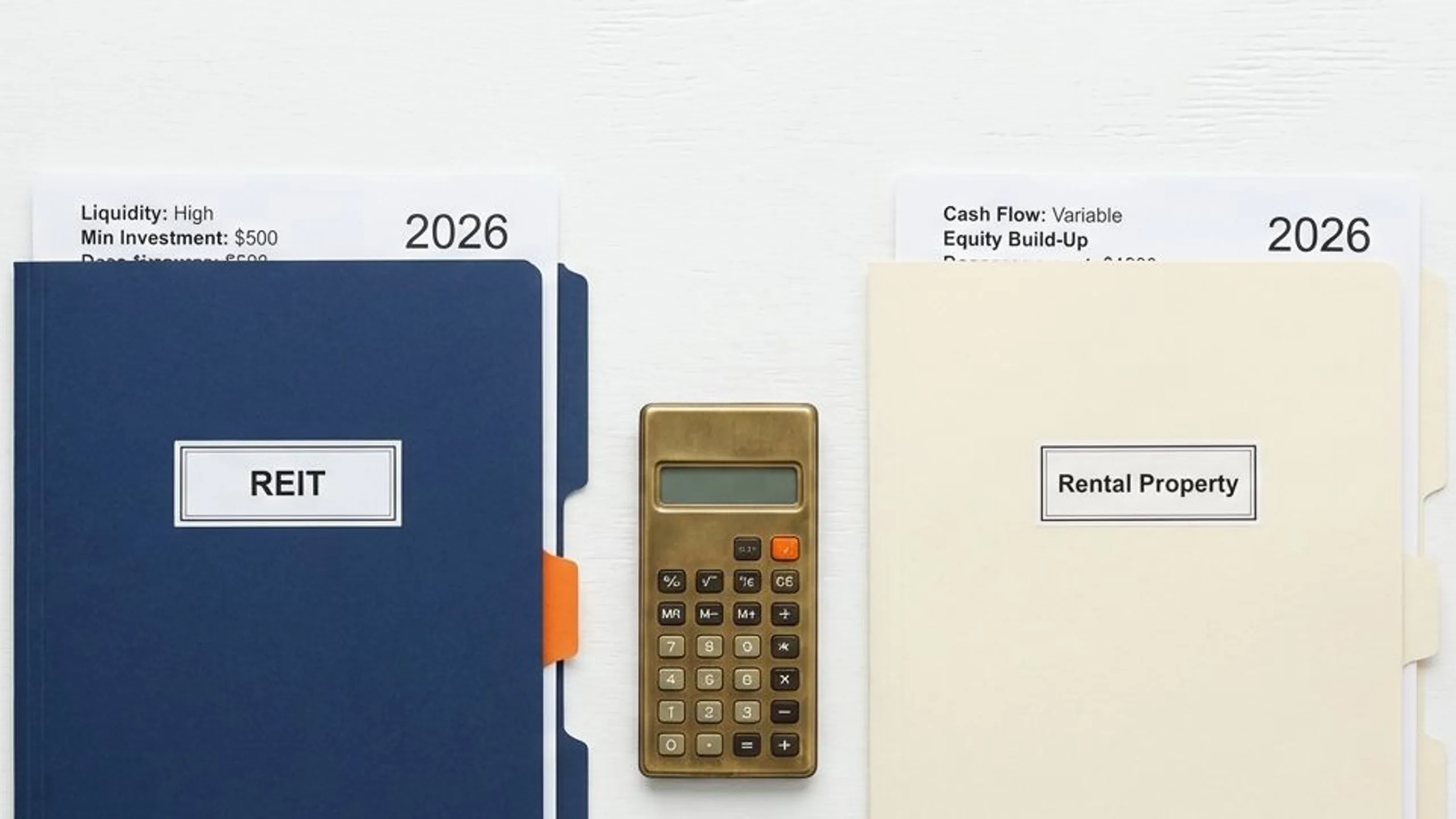
If your credit score is 580-679 OR you have less than 5% saved, FHA is the right answer. If your credit is 680+ AND you can put 5% down, conventional is usually better long-term because the mortgage insurance comes off when you build equity. There are exceptions on both sides, covered below. For the size of the opportunity these loans open up, our house hacking statistics count the two-to-four-unit homes in every state.
What FHA gives a house hacker
FHA stands for Federal Housing Administration. It's a U.S. government program that insures loans made by private lenders for owner-occupied properties, including 2-4 unit small multifamily.
The headline numbers (per HUD's Single Family Handbook 4000.1):
- 3.5% down with credit score 580+
- 10% down with credit score 500-579
- 1-4 units allowed (you must occupy one)
- 60-day move-in rule, 12-month minimum residency
- Loan limits set by county and by unit count, listed in the table below
What are the 2026 FHA loan limits for 2-4 unit homes?
According to HUD, the 2026 FHA loan limit for a 2-unit home is $693,050 in a standard-cost county and up to $1,599,375 in a high-cost county, effective January 1, 2026.
| Units | 2026 FHA floor (standard-cost county) | 2026 FHA ceiling (high-cost county) |
|---|---|---|
| 1 | $541,287 | $1,249,125 |
| 2 | $693,050 | $1,599,375 |
| 3 | $837,700 | $1,933,200 |
| 4 | $1,041,125 | $2,402,625 |
Source: HUD's 2026 FHA loan limits, effective January 1, 2026; find your county in HUD's loan limit lookup. Weighing unit counts? See single-family vs duplex for house hacking.
The trade-off: FHA charges mortgage insurance for the life of the loan when you put less than 10% down. There's an upfront premium of 1.75% of the base loan, usually financed, plus an annual premium of 0.55% of the balance on a 30-year loan with less than 5% down (0.50% with 5-10% down) when the base loan is at or below the conforming limit. Those rates apply to loans endorsed on or after March 20, 2023 (Handbook 4000.1, Appendix 1.0). The annual premium never goes away unless you refinance into a conventional loan.
On a $400,000 duplex at 3.5% down (base loan $386,000, or $392,755 with the upfront premium financed), that's about $180 a month: roughly $21,600 over 10 years, $32,400 over 15.
What conventional gives a house hacker
Conventional just means a loan that conforms to Fannie Mae or Freddie Mac guidelines and isn't government-backed. The lender sets the rates, the down payment minimums follow Fannie/Freddie rules.
The headline numbers (per Fannie Mae's Selling Guide):
- 5% down on owner-occupied 2-4 unit properties (since November 2023; was 15-25% before)
- 3% down on owner-occupied single-family
- Credit score minimum 620 typically; better rates at 680+
- 12-month occupancy expectation similar to FHA
- 2026 conforming baseline of $832,750 for a 1-unit home, with a high-cost ceiling of $1,249,125, per FHFA's 2026 conforming loan limits; 2-4 unit homes get higher limits from FHFA's county table
The trade-off: below 20% equity, you pay private mortgage insurance (PMI). PMI runs 0.3-1.5% of the loan balance per year depending on credit and LTV. Under the federal Homeowners Protection Act, you can ask to cancel PMI once your balance is scheduled to reach 80% of the home's original value, and the servicer must cancel it automatically at 78% as long as you're current. Either way the cost permanently goes away.
For a $400,000 loan at 5% down with 700 credit, PMI runs about $150-200/month. If property values rise modestly and you make principal payments, you might hit 20% equity in 3-4 years and shed the PMI permanently.
The five differences that actually matter
1. Down payment
FHA: 3.5% down. Conventional: 5% down on 2-4 unit owner-occupied (since November 2023).
On a $400k duplex: $14,000 vs. $20,000. The $6,000 gap matters when you're scraping together your first deal but doesn't make the long-term math obvious. For the full cash picture, including reserves, run the first-deal cash planner.
2. Credit score
FHA: 580 with 3.5% down. 500-579 with 10% down. Conventional: 620 minimum, but most lenders quote unfavorable rates below 680.
If your score is below 620, FHA is usually the only option. For the full score-by-score path including the FHA 500-579 band and VA loans, see house hacking with bad credit. If it's 680+, you have a real choice.
3. Mortgage insurance: the long-term cost driver
FHA MIP stays on for the life of the loan when you put less than 10% down. To remove it, you refinance. Conventional PMI comes off automatically at 78% of original value or by request at 80%.
Over a 10-year hold, this can be a $15,000-$25,000 difference in your favor with conventional on a $400,000 purchase, depending on the loan size and how fast you build equity.
4. Property condition standards
FHA appraisals also serve as inspections. Peeling paint, broken handrails, and missing smoke detectors all flag the property and require repairs before close. The seller usually has to fix them.
Conventional appraisals only verify value. Property condition is your problem to inspect for.
For house hackers, this cuts both ways. FHA makes some sellers reluctant (they don't want to fix items pre-close). Conventional moves faster but requires a careful inspection on your dollar.
5. Rental income counting
Both let you use projected rental income from the units you won't occupy to qualify. FHA counts 75% of fair market rent (Handbook 4000.1). Conventional counts 75% as well (Fannie Mae B3-3.1-08), though for properties with no rental history, requirements get stricter.
This is significant for first-time house hackers. On a duplex where each side rents for $1,500, you get an extra $1,125/month in qualifying income, which can let you afford a property that would otherwise stretch your debt-to-income ratio.
A worked example: same property, two loans
Imagine a $400,000 duplex in a midwestern metro. Each side rents for $1,500/month. Your credit is 700. According to Freddie Mac's weekly survey on FRED, the average 30-year fixed rate was 6.71% as of the week ending September 3, 2026. FHA quotes often run a little below conventional, but the gap varies by lender, so both paths use 6.71%.
| Line | FHA (3.5% down) | Conventional (5% down) |
|---|---|---|
| Down payment | $14,000 | $20,000 |
| Cash at closing (with est. 2.5% closing costs) | ~$24,000 | ~$30,000 |
| Loan amount | $392,755 (includes $6,755 financed upfront MIP) | $380,000 |
| Principal and interest (6.71%, 30-year) | $2,537 | $2,455 |
| Mortgage insurance | $180 (MIP, life of loan) | $180 (PMI, removable) |
| Property tax + insurance (est.) | $660 | $660 |
| Total monthly housing | $3,377 | $3,295 |
| Rent from the other unit | -$1,500 | -$1,500 |
| Your out-of-pocket | $1,877 | $1,795 |
Conventional is $82/month cheaper from day one (about $990 a year) for $6,000 more cash at closing. The bigger swing comes later: once PMI drops off, the conventional payment falls by another $180 and the gap grows to $262 a month. If PMI cancels at the start of year 5, conventional saves roughly $22,800 over a 10-year hold.
These are illustrative numbers. Rates, PMI, taxes, and insurance vary by lender and county, so run your own property through the house hacking calculator with the quotes you actually receive, and see our cash-needed study across 50 metros for what a first rental costs to close where you live.
When FHA wins
- Credit score 580-680: conventional rates and PMI become unfavorable below 680. FHA is the better path.
- Less than 5% saved: 3.5% down is a meaningful gap.
- Property needs visible cosmetic work: FHA appraisal forces the seller to address it pre-close, which is rare leverage.
- You plan to refinance within a few years: the lifetime MIP becomes irrelevant if you'll refi out of it after building equity.
When conventional wins
- Credit score 680+: you get the better rate AND removable PMI.
- You can stretch to 5-10% down: the long-term math favors conventional.
- You plan to hold the property long-term: removable PMI saves five figures over a decade.
- The property is in good condition: no benefit from FHA's stricter inspection.
For most credit-680+ buyers with at least $20-25k saved, conventional is the better long-term math. For credit-580-679 or sub-$15k cash buyers, FHA is often the only realistic option.
If you're not sure where you fit, the free PDF guide has a one-page worksheet for running both scenarios side by side.
When this comparison doesn't apply
- You're eligible for a VA loan. Veterans and active-duty service members can buy a 1-4 unit owner-occupied home with 0% down and no monthly mortgage insurance.
- You're buying 3-4 units in an expensive metro. FHA's self-sufficiency test (75% of gross rent from all units, including yours, must cover the full PITI payment) knocks out many triplexes and fourplexes where rents lag prices.
- The price is above your county's FHA limit. A $750,000 duplex in a standard-cost county is above the 2026 FHA 2-unit floor of $693,050 but inside the conforming limit, so conventional is the only low-down-payment path.
Frequently Asked Questions
Can I switch from FHA to conventional later?
Yes, by refinancing. Once you have 20% equity in the property (through appreciation, principal paydown, or both), you can refinance into a conventional loan and remove the FHA mortgage insurance permanently. Refinance closing costs typically run 2-3% of the new loan amount, so make sure the savings justify the upfront cost.
What's the FHA self-sufficiency test for 3-4 unit properties?
FHA requires that 75% of the projected gross rent from all units in a 3-4 unit property, including the one you live in, cover the full principal, interest, taxes, and insurance payment. Duplexes are exempt. In expensive markets where rents lag prices, the test disqualifies many triplexes and fourplexes. Conventional has no equivalent test.
Does conventional 5% down work for all 2-4 unit properties?
It works for owner-occupied 2-4 unit properties under Fannie Mae's HomeReady or standard programs as of November 2023. The property has to qualify as a 2-4 unit residential dwelling, you have to occupy one of the units, and you have to meet the lender's overlays. Always verify with your specific lender before assuming the 5% rule applies.
How much rental income can I count toward qualifying?
Both FHA and conventional count 75% of fair market rent from the units you won't occupy. The 25% reduction accounts for vacancy and operating expenses. You'll need a market rent appraisal addendum (FHA Form 1007 or Fannie Mae Form 1007) to document the figures. If the property has existing leases, those rents typically take precedence over market estimates.
Which loan has lower closing costs?
FHA closing costs are usually 0.5-1% higher than conventional because of the upfront 1.75% mortgage insurance premium that gets financed into the loan. Conventional doesn't have an equivalent upfront premium. Other closing costs (title insurance, appraisal, origination) are similar.
Can my partner or co-borrower not occupy the property?
Both programs allow a non-occupying co-borrower. On FHA, if that person isn't a family member, the maximum loan generally drops to 75% of value, which erases the low-down-payment advantage. Conventional allows a non-occupant co-borrower subject to the lender's rules. Either way, the borrower who lives there still has to meet the occupancy requirement.
Can you house hack again after 12 months?
Yes. Both loan types expect 12 months of occupancy; after that you can move out, keep the property as a rental, and buy the next owner-occupied home. FHA generally allows only one FHA-insured loan at a time (Handbook 4000.1 lists narrow exceptions), so the second purchase is usually conventional, with 75% of the first property's rent offsetting its mortgage in your debt-to-income ratio.
If you're still unsure which fits your situation, the smartest move is to get pre-approved with one FHA-specialist lender and one conventional lender. The numbers they quote will make the choice obvious. Both pre-approvals are free and don't commit you to either lender. Our pre-approval walkthrough for investment property lists what to bring. The 28-day course walks through the lender outreach and side-by-side comparison process in week 3.
This article is education, not financial, legal, or tax advice. Real estate carries risk, and the numbers here are examples. Check them against your own market and talk to a licensed professional before you buy.