In this article11 sections
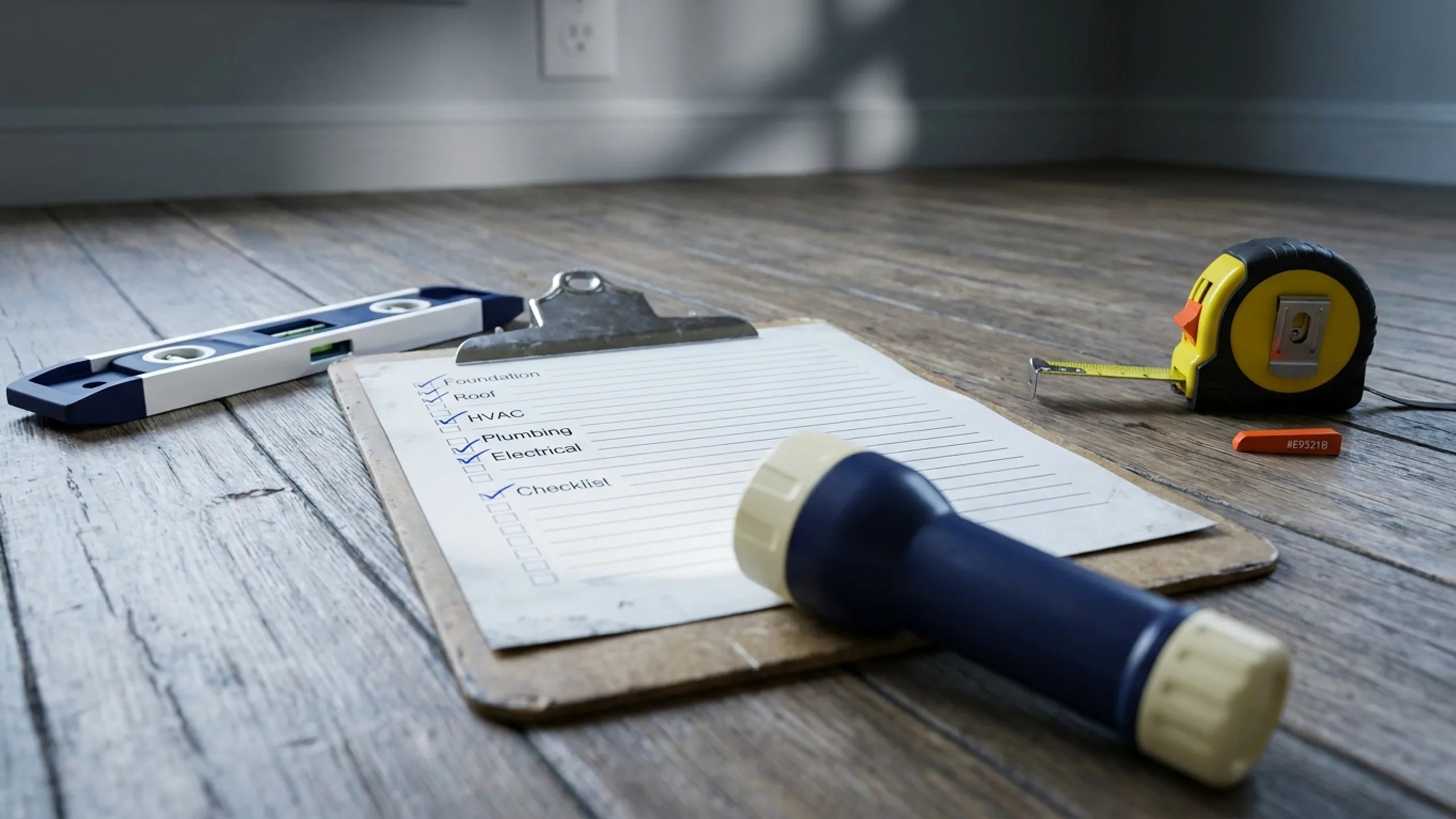
A home inspection checklist for investors is different from a homebuyer's checklist. As an investor, you're not just looking for "is this safe to live in." You're forecasting which big-ticket replacements will hit in the next 5-10 years and how much CapEx the property will pull from your cashflow. The 50+ item checklist below groups by system (foundation, roof, HVAC, plumbing, electrical, exterior, kitchen, baths) with notes on what each red flag actually means for your underwriting.
This article is for first-time U.S. investors who are about to do their first inspection or want to attend the inspector's walkthrough. If you've read generic "what to look for at a home inspection" articles and felt they didn't explain why each item matters, you're in the right place. The honest answer is most homebuyer checklists focus on safety; investor checklists focus on cashflow risk and CapEx forecasting.
Key Takeaways
- Investor inspection differs from homebuyer inspection in priority. Cashflow risk and CapEx forecasting come first.
- Hire a general inspector ($350-$700) plus specialty inspections (sewer scope, roof, termite) as warranted by property age.
- The 7 systems: foundation, roof, HVAC, plumbing, electrical, exterior, interior (kitchen + baths).
- Each red flag converts to a CapEx forecast. Roof replacement is $8,000-$25,000 over 20-25 years; HVAC is $5,000-$10,000 over 15-20 years.
- The inspection is the last cheap diligence layer. Use it.
Why investor inspections are different
A homebuyer asks: "Is this safe to live in for the next 1-3 years?"
An investor asks: "What will this property cost me in CapEx over the 10-year hold? How does that change my underwriting?"
Per HUD FHA Handbook 4000.1, inspections are not appraisals. The inspector's job is to identify defects and major-component conditions; converting that into financial implications is your job. The 50+ items below help you do that conversion.
System 1: Foundation and structure
Foundation issues are the highest-cost potential repair. Look for:
- Cracks in foundation walls (cosmetic vs structural)
- Water staining at foundation perimeter
- Doors or windows out of square
- Sloped or uneven floors
- Cracks in interior drywall radiating from corners
- Visible movement at brick or stone exterior
- Crawl space moisture or efflorescence
- Sump pump presence and condition
- Drainage at lot perimeter
- Tree roots near foundation
CapEx implication: structural repairs run $5,000-$25,000+. A property with active foundation issues should be re-priced or walked from.
System 2: Roof
Roofs are predictable: 20-25 year lifespan for asphalt shingles, 30-50 for metal, 50+ for tile. Look for:
- Roof age (ask seller, check from inspection)
- Asphalt shingle condition (curling, missing granules, cracking)
- Flashing around chimneys, vents, valleys
- Gutters and downspouts (condition, drainage path)
- Soffit and fascia condition
- Attic ventilation (intake and exhaust balance)
- Visible water staining in attic
- Ice dam history (in cold climates)
CapEx implication: roof replacement is $8,000-$25,000 for an average single-family. A roof at 18+ years should be discounted from your offer or replaced as a contingency. Whether your deposit survives walking away depends on the contingency, which is covered in earnest money deposits explained.
System 3: HVAC
HVAC has the highest replacement frequency among major systems. Look for:
- AC unit age and condition
- Furnace age and condition
- Ductwork condition and insulation
- Thermostat type and operation
- Filter condition (proxy for maintenance history)
- Refrigerant type (older R-22 systems are end-of-life)
- Combustion safety on gas furnaces
- Heat pump or hybrid system specifics
Per Department of Energy heating and cooling guidance, typical HVAC system lifespan is 15-20 years for AC, 20-30 for furnace.
CapEx implication: HVAC replacement is $5,000-$10,000 per system. A 15-year-old system is 75% through its life; budget accordingly.
System 4: Plumbing
Plumbing varies widely with age:
- Water heater age and type (tank vs tankless)
- Pipe material (copper, PEX, galvanized, lead, polybutylene)
- Visible leaks or staining under sinks
- Water pressure adequate at all fixtures
- Drain function (slow drains suggest blockages)
- Sewer line condition (sewer scope recommended for pre-1980)
- Sump pump if applicable
CapEx implication: water heater replacement is $1,000-$3,000 every 8-12 years. Polybutylene or galvanized re-pipe is $5,000-$15,000. Sewer line replacement is $3,000-$15,000+. Pre-1940 properties with original galvanized pipes need a hard look.
System 5: Electrical
Electrical issues create both safety and code-compliance risk:
- Service panel size (100 amp minimum, 200 amp preferred)
- Panel brand (avoid Federal Pacific Electric, Zinsco, certain Sylvania)
- Knob-and-tube or aluminum wiring presence
- GFCI outlets at kitchens, baths, exterior, garage
- Smoke and carbon monoxide detectors
- Outdoor outlets and lighting condition
CapEx implication: panel replacement is $1,500-$4,000. Full re-wire is $8,000-$20,000+. Federal Pacific or Zinsco panels are insurance and safety risks per Insurance Information Institute documentation.
System 6: Exterior
Exterior items affect curb appeal and weather protection:
- Siding condition (wood rot, hail damage, paint adhesion)
- Window condition and seals
- Door operation and seals
- Driveway and walkway cracks
- Deck or porch structural integrity
- Grading slope away from foundation
- Tree health near structure
CapEx implication: vinyl siding replacement is $5,000-$15,000 per side. Window replacement is $400-$800 per window. Many issues here are cosmetic but compound.
System 7: Kitchen and baths
Highest concentration of finishes, plumbing, and ventilation:
- Cabinet condition and door alignment
- Counter condition (laminate vs stone)
- Fixture function and water staining
- Exhaust fan operation
- Floor condition near plumbing fixtures (water damage signal)
CapEx implication: kitchen reface is $2,000-$5,000; full remodel $15,000-$50,000. Bathroom remodel is $5,000-$25,000. Plan replacements every 15-20 years for a rental.
Specialty inspections to consider
For pre-1980 properties, add:
- Sewer scope ($150-$300) for orangeburg, cast iron, or root intrusion
- Lead paint (mandatory disclosure for pre-1978 properties per EPA pre-1978 lead-paint disclosure guidance)
- Asbestos if popcorn ceilings or specific material types
For specific climates:
- Termite/wood-destroying organism (mandatory in many southern states)
- Mold/moisture testing if water staining present
- Radon testing if in EPA Zone 1
For specialty properties:
- Septic inspection ($300-$500) if private septic
- Well inspection ($200-$400) if private well
- Pool inspection ($150-$300) if pool present
How to convert findings to CapEx
Each red flag becomes a line item in your cashflow model:
| System | Component | Typical lifespan | Replacement cost | Years remaining |
|---|---|---|---|---|
| Roof | Asphalt shingles | 20-25 yrs | $8,000-$25,000 | (current age − 25) |
| HVAC | AC + Furnace | 15-20 yrs | $10,000-$15,000 | varies |
| Water heater | Tank | 8-12 yrs | $1,000-$3,000 | varies |
| Plumbing | Re-pipe | 50-80 yrs | $5,000-$15,000 | varies |
| Electrical | Panel | 30-50 yrs | $1,500-$4,000 | varies |
| Kitchen | Full update | 15-20 yrs | $15,000-$50,000 | varies |
Allocate annual CapEx reserve based on the sum of items × (1 / years remaining). On a typical $250,000 single-family, this often produces $200-$500/month in CapEx allocation, which the hidden costs of owning rental property article details.
For broader cashflow context, see how to calculate NOI on a rental property and Mistakes #5: underestimating expenses.
Frequently Asked Questions
How much does a home inspection cost for an investor?
$350-$700 for a general inspection on a single-family property. Specialty inspections add $150-$500 each (sewer scope, termite, roof certification, mold testing). Total inspection budget for an investment-grade due-diligence package on a typical first deal runs $500-$1,200. The cost is a fraction of one percent of the purchase price and prevents $5,000-$50,000+ surprises.
What should an investor look for during a home inspection?
The 7 systems matter most: foundation, roof, HVAC, plumbing, electrical, exterior, kitchen/baths. Within each system, focus on age and remaining life (CapEx forecast) and red flags that signal larger issues. Foundation problems are the highest-cost potential repair. Roof, HVAC, water heater, and major appliances have predictable replacement cycles you can budget for.
Should I attend the home inspection?
Yes, for your first deal. Walking the property with a licensed inspector teaches you what to look for and helps you understand each system's condition. You can ask questions in real-time, see what they're flagging, and develop your own pattern recognition. After 2-3 inspections, attending becomes optional.
What's the difference between an inspection and an appraisal?
An inspection identifies defects and forecasts CapEx; an appraisal determines property value. Inspectors look at every system and produce a defect list. Appraisers compare your property to recent sales and produce a value estimate. Lenders require appraisals (not inspections); buyers should require both.
Can I waive the home inspection contingency?
Technically yes, but rarely should. Waiving the inspection saves $400-$700 and exposes you to potentially $5,000-$50,000+ in undiscovered issues. Per Mistakes #6: overpaying, the inspection cost is a fraction of one percent of the purchase price. Skip it only if the property is being demolished or if seller credits the full estimated repair cost.
What red flags should make me walk away?
Three categories of dealbreakers: (1) active foundation issues with structural movement, (2) full re-pipe needed (galvanized, polybutylene), or (3) a panel from Federal Pacific Electric, Zinsco, or other defective brands plus visible electrical issues. Each of these can transform a deal that looked profitable into a money-loser. Renegotiate or walk.
The home inspection checklist for investors is more thorough than a homebuyer's checklist because the goal is different. The 50+ items above translate directly into CapEx forecasts that go into your underwriting model. The 28-day course covers inspection prep in week 4 with the full 50-item printable checklist.
This article is education, not financial, legal, or tax advice. Real estate carries risk, and the numbers here are examples. Check them against your own market and talk to a licensed professional before you buy.