In this article12 sections
- Stage 1: Offer accepted, contract executed
- Stage 2: Open escrow + earnest money
- Stage 3: Inspection period
- Stage 4: Loan application and underwriting
- Stage 5: Appraisal
- Stage 6: Title search and insurance
- Stage 7: Final loan approval
- Stage 8: Closing Disclosure delivery
- Stage 9: Final walkthrough
- Stage 10: Signing day and recording
- Investor-specific items
- Frequently Asked Questions
The real estate closing process step by step takes 30-45 days from contract acceptance to keys-in-hand for most U.S. transactions. The 10 stages below cover every step from offer acceptance through funding day, with investor-specific notes that generic homebuyer guides skip. The honest answer is closing isn't mysterious; it's a series of well-defined milestones, and the cost of misunderstanding any one of them is real money or a dead deal.
This article is for first-time U.S. investors who are under contract or about to be, and want to understand the next 30-45 days. If you've signed a purchase agreement and felt unsure what happens next, you're in the right place. The honest answer is the process is procedural; what derails deals is missing deadlines, not the process itself.
Key Takeaways
- Closing typically takes 30-45 days from contract acceptance per Fannie Mae standard timelines.
- Earnest money deposits of 1-3% of purchase price are wired into escrow within 48-72 hours of contract acceptance.
- The Closing Disclosure must arrive at least 3 business days before closing per Consumer Financial Protection Bureau rules.
- Investor-specific items: LLC vesting (close in personal name then transfer for conventional, direct LLC for DSCR), reserve verification, rental income coordination.
- Where deals derail: missed inspection deadlines, appraisal short, financing contingency expiration, last-minute title issues.
Stage 1: Offer accepted, contract executed
Once both parties sign the purchase agreement, the contract is binding. The clock starts on every other deadline: inspection period, financing contingency, appraisal, closing date. Read the entire contract carefully; the deadlines are typically tight (5-15 days for inspection, 21-30 days for financing). Per CFPB closing process guidance, every contingency has a date attached, and missing it can forfeit your earnest money or the deal.
Your immediate actions:
- Confirm contract is fully executed
- Note all deadlines on a calendar
- Start working on inspection scheduling and lender file submission immediately
Stage 2: Open escrow + earnest money
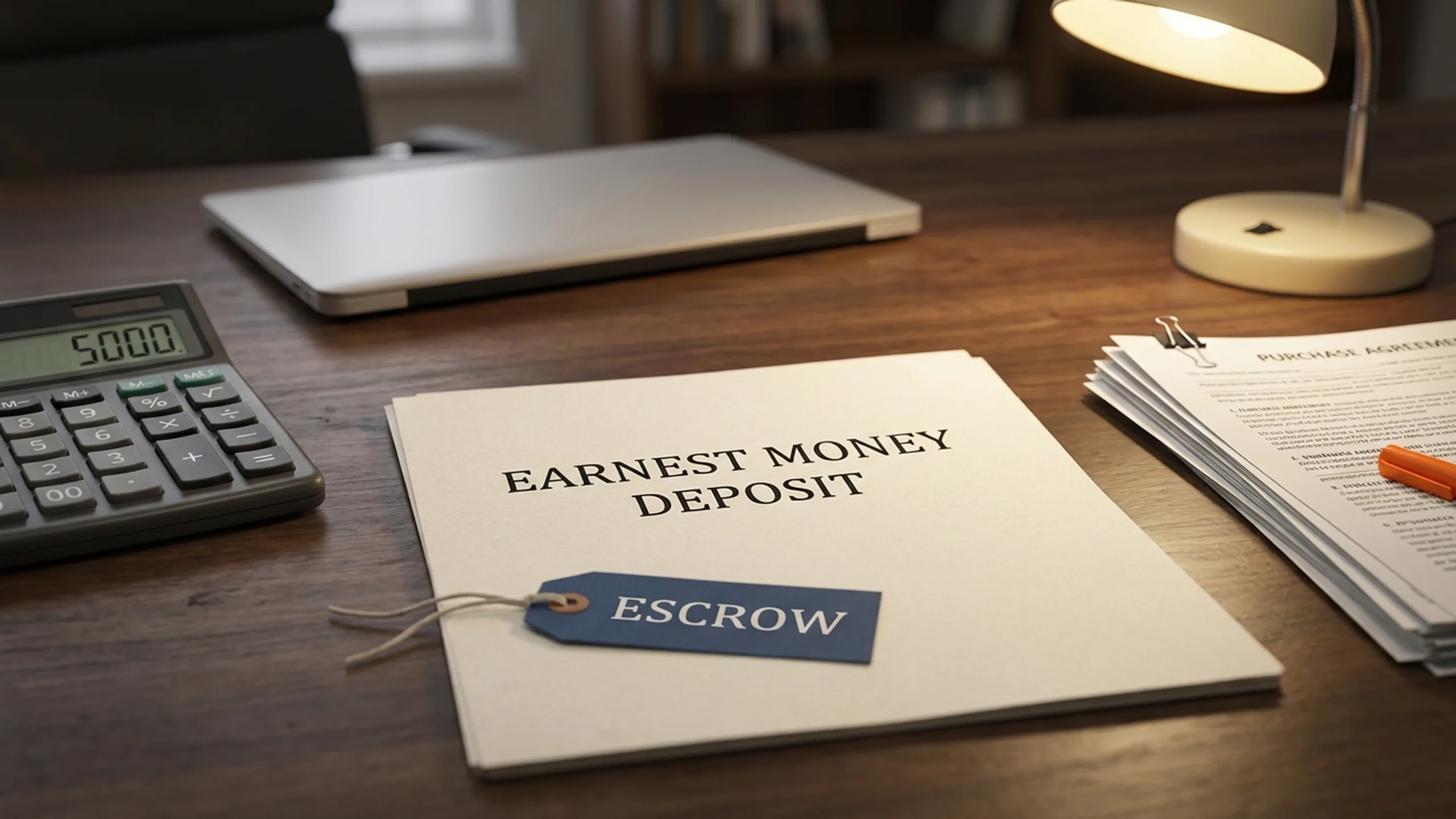
Within 48-72 hours of contract acceptance, you wire your earnest money deposit (typically 1-3% of purchase price for investment property) into an escrow account held by the title company or closing attorney. Per CFPB earnest money guidance, the funds are held until closing, then applied to your down payment.
Investor-specific: confirm wiring instructions through a verified phone call to the title company, not via email reply. Wire fraud targeting closings is well-documented per FBI Internet Crime Complaint Center reports. See earnest money deposit explained.
Stage 3: Inspection period
Typical 5-15 day window after contract execution. Hire a licensed inspector ($350-$700) for a general inspection, plus specialty inspections as needed (sewer scope, roof certification, termite, pool, foundation).
Investor-specific: the inspection is your last cheap diligence layer. Investment-grade inspection includes:
- General inspection (always)
- Sewer scope ($150-$300) for any property older than 1980
- Roof certification ($100-$200) if roof age is unclear
- Mold/moisture testing if water staining present
Per HUD FHA Handbook 4000.1, inspections are not the same as appraisals; the appraiser does not inspect for habitability or operational defects. See home inspection checklist for investors.
After inspection, you have three options: accept and proceed, request repairs or credits, or terminate (within the inspection window) with earnest money refunded.
Stage 4: Loan application and underwriting
If you have pre-approval (and you should, per Mistakes #3), this stage is mostly document submission. The lender:
- Re-pulls credit
- Verifies employment (within 10 days of close)
- Verifies bank statements (looking for unusual activity)
- Underwrites the file against Fannie Mae or Freddie Mac standards per Fannie Mae's Selling Guide
Investor-specific: lenders verify reserves rigorously on investment property loans. Don't move large sums between accounts during underwriting; it triggers questions and delays.
Underwriting takes 14-21 days for clean files. Conditional approval is normal; final approval comes after appraisal and final review.
Stage 5: Appraisal
The lender orders an appraisal ($400-$700) within the first week after contract acceptance. The appraiser visits the property, pulls comps, and produces a value report. Three outcomes:
- Appraises at or above contract price: loan proceeds at the contract amount.
- Appraises below contract price: lender finances only to the appraised value. You either bring more cash, renegotiate price with seller, or terminate.
- Appraisal contingency (if your contract has one) lets you walk if appraisal comes in low.
Investor-specific: for purely investment loans, appraisers use comparable rentals and the income approach in addition to comparable sales. Confirm with your lender which appraisal type they require.
Stage 6: Title search and insurance
The title company orders a title search to verify clear ownership and identify any encumbrances (liens, easements, judgments). Per American Land Title Association (ALTA) standards, the title search produces a commitment document the lender reviews before final approval.
Two policies are typically issued at closing:
- Lender's policy (required by all lenders): protects the lender's lien position
- Owner's policy (optional but recommended): protects your ownership interest
For investors, the owner's policy is almost always worth it. See title insurance explained for investors.
Stage 7: Final loan approval
After appraisal, title commitment, and document collection, the lender issues final approval (often called "clear to close"). This typically happens 5-10 days before scheduled closing. Conditions are cleared, the loan moves to closing prep.
Common last-minute conditions: updated bank statements, employment re-verification, additional documentation on a specific deposit. Respond fast; delays cascade into the closing date.
Stage 8: Closing Disclosure delivery
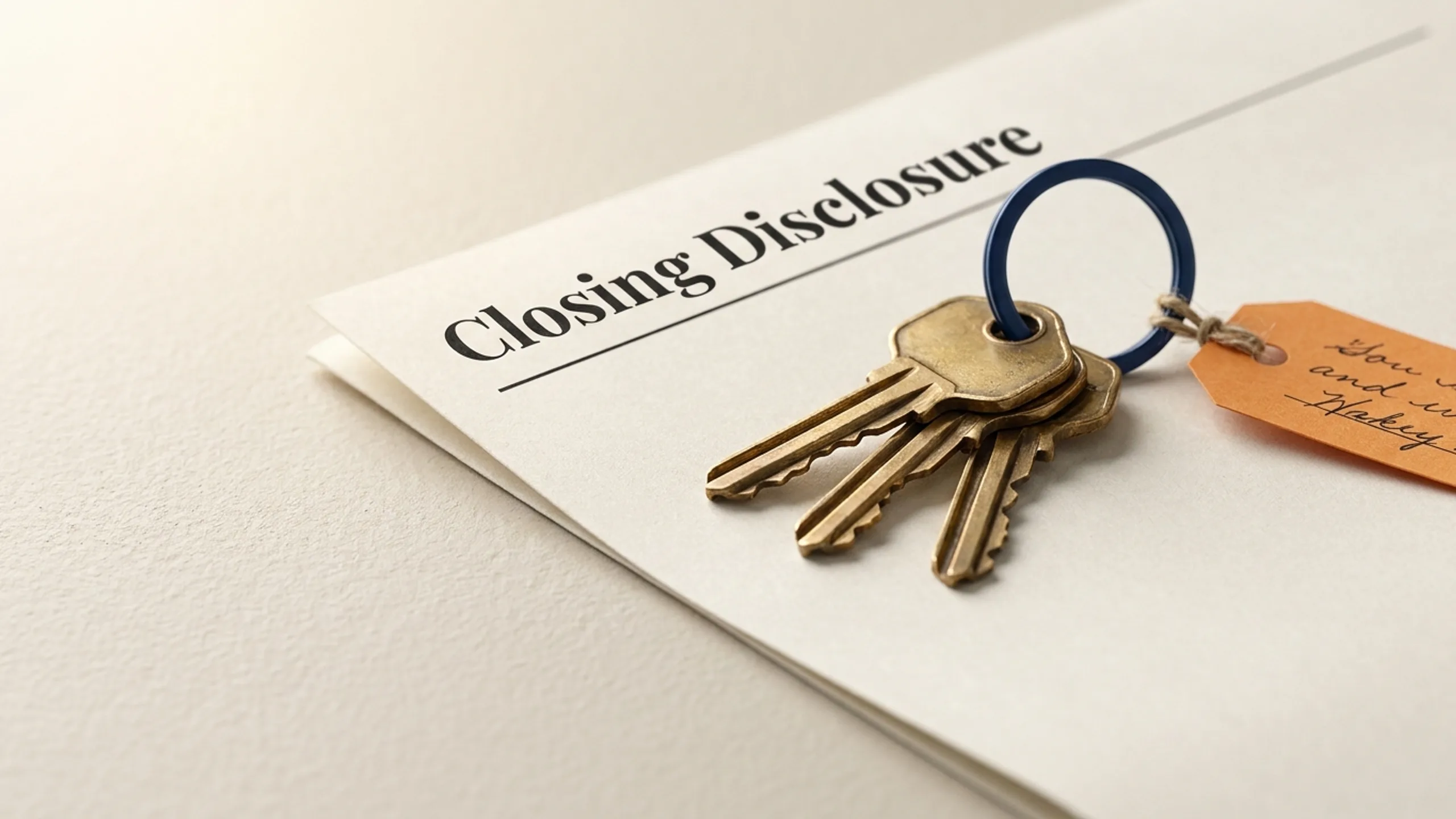
Per CFPB Closing Disclosure rule, the lender must deliver the Closing Disclosure (CD) at least 3 business days before scheduled closing. This 5-page document itemizes every cost: loan amount, rate, payment, closing costs, prepaids, escrows, cash to close.
Review carefully. Compare the CD to your most recent Loan Estimate. Significant differences require lender explanation. Material errors trigger a new 3-day waiting period before closing.
For the full breakdown, see closing costs for investment property.
Stage 9: Final walkthrough
Within 24-48 hours before signing, you do a final walk-through of the property. Confirm:
- Property is in agreed-upon condition
- All negotiated repairs were completed (with documentation)
- All seller-included items remain
- No new damage from move-out
If issues arise, the most common remedies are seller credits at closing or escrow holdbacks for incomplete repairs.
Stage 10: Signing day and recording
The signing typically takes 60-90 minutes at the title company or closing attorney's office. You'll sign:
- Promissory note (loan repayment terms)
- Mortgage or deed of trust (security on the property)
- Closing Disclosure (final version)
- Various lender disclosures
- Title documents
You wire your remaining cash-to-close to escrow. The title company records the deed and mortgage at the county recorder's office, typically same-day or next business day. Once recorded, ownership transfers, keys are released, and the property is yours.
Investor-specific items
A few things investor closings handle differently:
LLC vesting. Conventional Fannie Mae loans must close in your personal name (then you can transfer to an LLC, with some restrictions). DSCR loans typically allow direct LLC vesting.
Reserve verification. Lenders require 6 months of PITI reserves on the subject property plus 2 months on each existing financed property. Verify reserves are confirmed in writing before closing day.
Rental income coordination. If buying a tenant-occupied property, the existing lease transfers with the property. Confirm with the seller that rents are current and security deposits transfer to you at closing. See first time landlord mistakes for tenant-handover procedures.
Insurance binder. Lender requires proof of landlord insurance (not homeowner) before closing. Order at least 14 days before close to avoid delays.
For the broader pre-closing context, see how to avoid overpaying for a rental property and how to finance a rental property.
Frequently Asked Questions
How long does the real estate closing process take?
30-45 days from contract acceptance for most conventional and DSCR investment loans. Per Fannie Mae standard timelines, 30 days is achievable for clean files (W2 borrowers, no LLC vesting, well-documented reserves). 45 days is more realistic for first-time investors. Cash purchases close in 7-21 days because no underwriting is needed.
What can derail a real estate closing?
Common derailments: missed inspection deadlines (forfeit termination right), appraisal coming in below contract price (financing contingency triggers renegotiation), title issues discovered during title search, employment changes during underwriting (lender re-verifies within 10 days of close), and last-minute documentation requests not responded to quickly. Most of these are manageable with discipline.
What happens at the final walkthrough?
24-48 hours before signing, you walk the property to confirm condition matches what was negotiated. Verify negotiated repairs were completed with documentation, all seller-included items remain, and no new damage occurred from move-out. If issues arise, common remedies are seller credits at closing or escrow holdbacks for completion of items.
What documents do I sign at closing?
Standard closing documents include: promissory note (loan repayment terms), mortgage or deed of trust (lender's security), Closing Disclosure (final version), various lender disclosures, and title documents (deed). Investment property closings add LLC vesting paperwork (if applicable) and landlord insurance binders. Total signing time is typically 60-90 minutes.
How much cash do I need at closing?
Down payment plus closing costs minus earnest money already in escrow. For a $250,000 investment property at 25% down with typical 2-4% closing costs, total cash to close is roughly $67,500-$72,500 ($62,500 down + $5,000-$10,000 closing costs minus your $2,500-$7,500 earnest money already deposited). See closing costs for investment property for the full breakdown.
What's the difference between closing on a primary residence and investment property?
Investment property closings have additional verification: reserve confirmation (6 months PITI + 2 months on existing properties), landlord insurance proof (not homeowner), often LLC vesting paperwork, and stricter DTI verification with rental income offset rules per Fannie Mae. Otherwise the process is similar; document load is heavier for investment.
The real estate closing process is procedural, not mysterious. The 10 stages above happen on every conventional U.S. closing in roughly the same order. The cost of skipping or rushing any stage is real money. The 28-day course walks through closing in week 4 with templates for each stage.
This article is education, not financial, legal, or tax advice. Real estate carries risk, and the numbers here are examples. Check them against your own market and talk to a licensed professional before you buy.