In this article7 sections
The two most common house-hack property types are a single-family home where you rent out spare bedrooms, and a duplex where you live in one unit and rent the other. Both qualify for the same low-down-payment owner-occupied financing. Both can produce strong cashflow. The differences that actually matter are: privacy, market availability, cashflow potential, and what happens when you eventually move out. This guide walks through each so you can pick the right property for your situation.
This article is for first-time investors who've decided to house hack and now have to choose between a single-family with rentable bedrooms and a small multifamily. If you're earlier in the decision, start with house hacking for beginners.
Key Takeaways
- Privacy: a duplex gives you full living separation. A single-family with rented rooms means sharing the kitchen, bathroom, and living spaces.
- Cashflow: duplexes typically produce more rental income per property because you rent a full unit, not just bedrooms. A duplex commonly grosses $2,000-3,000/month; a 4-bedroom single-family with two rented rooms grosses $1,400-2,200.
- Market availability: small multifamily is rare in many U.S. metros. Single-families are everywhere. In coastal markets, single-family room rental is often the only feasible option.
- Financing is identical: both qualify for FHA at 3.5% down or conventional at 5% down.
- Exit strategy: duplexes turn into real rental investments when you move out. Single-family room rentals turn back into single-family homes (you can rent the whole house, but lose the per-room rental premium).
Privacy: the lifestyle dealbreaker
FHA financing applies to 1-4 unit properties per the HUD FHA Handbook 4000.1, and conforming conventional loan limits per Fannie Mae's Eligibility Matrix cover both single-family and 2-4 unit purchases. For the wider data on house hacking, see house hacking statistics.
Privacy is the single biggest difference between the two strategies, and it shapes most of the rest.
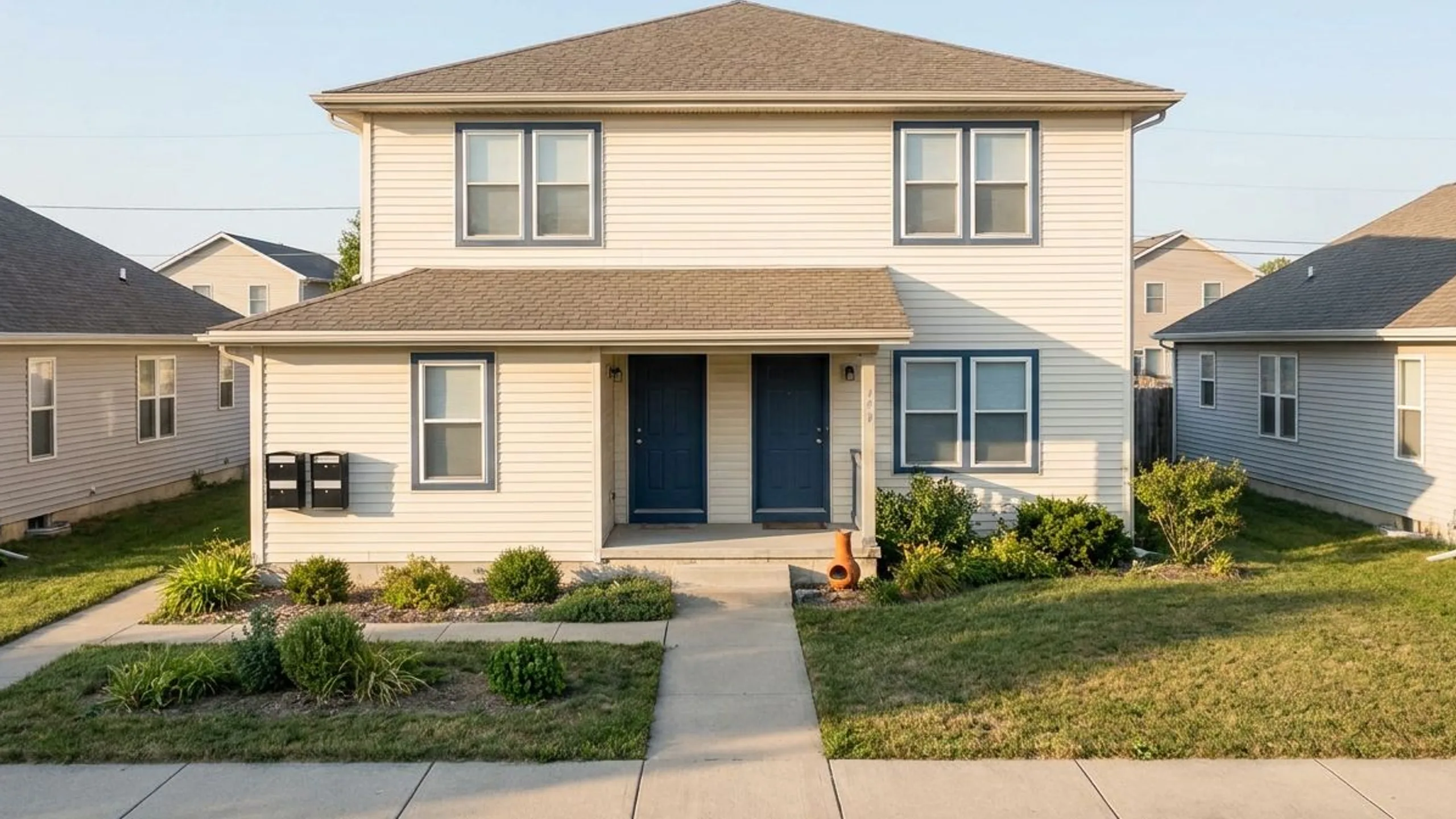
Duplex: separate kitchens, separate bathrooms, separate front doors. You and your tenants are neighbors, not roommates. You'll hear them through walls and floors, but you don't share appliances or living rooms. Most people find this manageable indefinitely. Supply matters when you choose between them. Small multifamily is only a fraction of the housing stock nationally, as our house hacking statistics show state by state. What you often do share is a meter, covered in splitting utilities in a duplex.
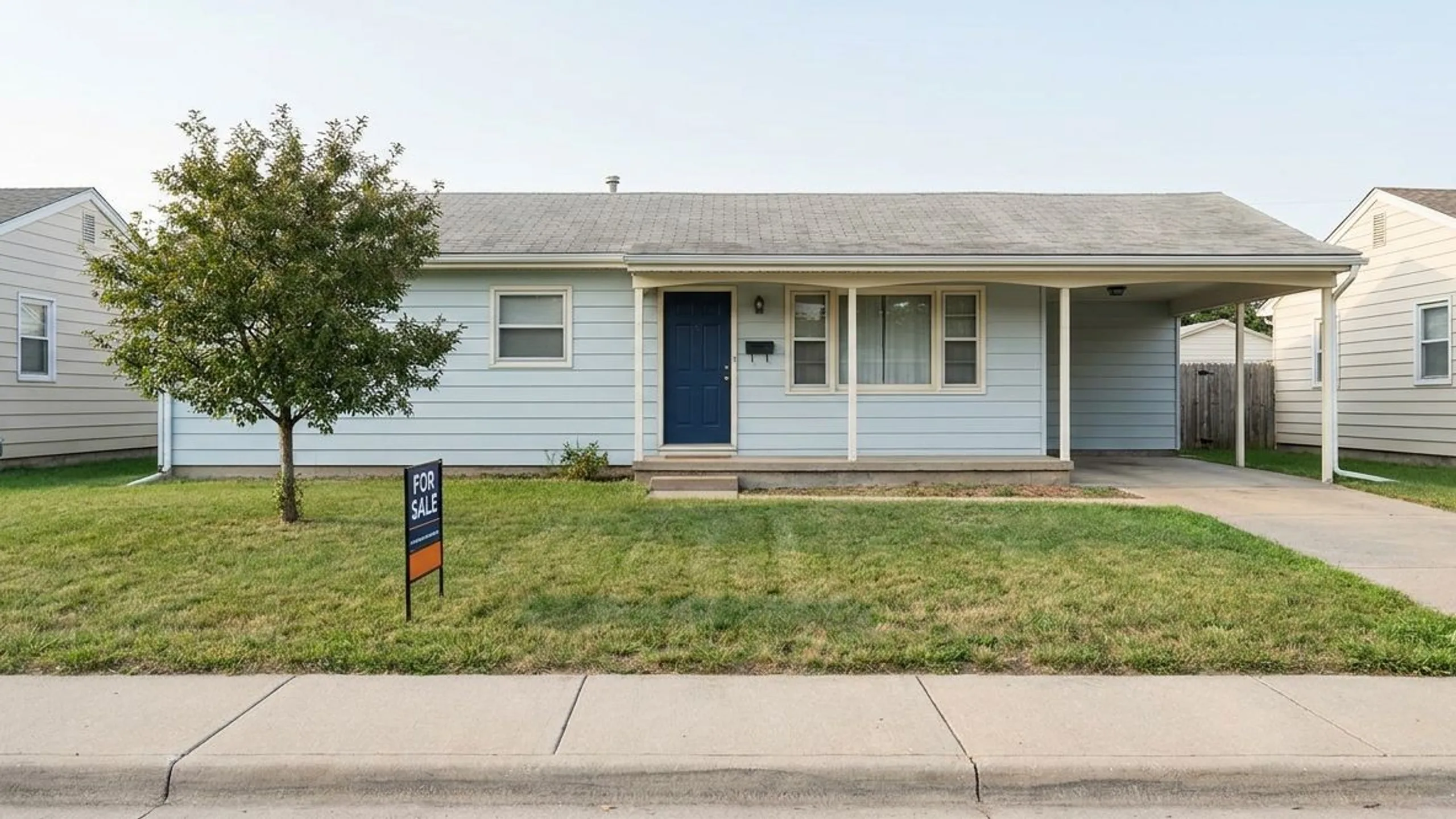
Single-family with rented rooms: shared kitchen, shared bathrooms (usually), shared common areas. You're effectively running a small boarding house. You see your tenants every day. Compatibility with whoever you rent to becomes a daily quality-of-life issue.
Some people thrive in this setup, especially in their 20s. Others find it draining within a few months. Be honest about which type you are before you buy.
Cashflow: duplexes win, but availability matters
A typical duplex produces more rental income than a single-family with rented bedrooms because a full unit commands more rent than per-room rates.
Duplex example (midwestern metro):
- Both sides rent for $1,400/month
- You live in one side, rent the other
- In-residence: $1,400/month rent collected
- Post-occupancy: $2,800/month total
Single-family rented-rooms example (same metro):
- 4-bedroom house with three spare bedrooms
- Each rented room: $700/month
- In-residence: $2,100/month rent collected
- Post-occupancy: $2,800/month if you rent the whole house
In-residence, the single-family example actually produces more rent ($2,100 vs $1,400). The duplex catches up in post-occupancy, when you can rent your old unit at full-unit rate.
Where it gets interesting: in coastal markets where duplexes are scarce or expensive, a single-family room rental can produce more cashflow per dollar invested than a duplex. In Denver, Phoenix, or Tampa, two rented rooms at $800-900 each is realistic and can cover most of your mortgage on a property under $500k.
For a step-by-step cashflow analysis framework that works for both property types, see how to analyze a house hack before you buy.
Market availability: the practical constraint
In many U.S. metros, the choice between single-family and duplex is made for you by what's actually for sale.
Where duplexes are available (Census ACS housing inventory shows 2-4 unit small multifamily concentrated in):
- Industrial-heritage Midwest cities (Cleveland, Pittsburgh, Cincinnati, St. Louis)
- Older Northeast metros (Boston, Philadelphia, parts of New York)
- Some Mid-Atlantic and Southern cities (Baltimore, Birmingham, Memphis)
Where single-family rented-rooms is the only realistic path:
- Most West Coast metros (Los Angeles, Seattle, San Diego)
- Most Southwest sprawl markets (Phoenix, Las Vegas, Dallas suburbs)
- Most Sunbelt markets where post-WWII construction dominates
A search of Census American Community Survey housing data by metro will tell you the share of 2-4 unit properties versus single-family in your area. If it's below 5%, plan on single-family room rental.
Financing is identical
This is worth saying clearly because beginners often assume duplexes need more down payment than single-family. They don't, as long as you owner-occupy.
FHA: 3.5% down on 1-4 unit owner-occupied. Same loan limits scale up for multi-unit. Conventional: 5% down on 2-4 unit owner-occupied (per Fannie Mae Selling Guide update of November 2023).
Both let you count 75% of fair market rent from the units you don't occupy toward qualifying. Both have the same 60-day occupancy and 12-month residency rules. The only meaningful financing difference is on FHA's self-sufficiency test for triplexes and fourplexes (duplexes are exempt).
What happens when you move out
This is where the long-term value diverges.
Duplex: when you move out, you can rent your former unit at full market rate. The property becomes a real two-unit rental investment. You collect $2,800/month in our example, pay your expenses, and keep the cashflow as actual income.
Single-family rented rooms: when you move out, you can either rent each room individually (now you're managing 3-4 mini-leases as a landlord, often with high turnover), or rent the whole house to one family at full-house rate (typically $1,800-2,400 in our example, less than the $2,100 you got with rented rooms).
The first option has higher gross income but more management. The second option has cleaner management but lower gross.
A duplex is more aligned with "buy and hold this property as a rental forever." A single-family with rented rooms is more aligned with "use this strategy for 2-3 years while building credit and savings, then sell or convert."
A simple decision framework
Pick a duplex if:
- Small multi-family is available in your market.
- You can put down 5-10% on a higher-priced property.
- You value privacy and want to live independently from tenants.
- You plan to keep the property as a rental long after moving out.
Pick a single-family with rented rooms if:
- Duplexes aren't available or are out of budget.
- You're comfortable sharing common spaces with roommates.
- You're in your 20s or have done college-style living before.
- You see this as a 2-3 year strategy, not a permanent plan.
For most beginners in markets where duplexes are realistic, a duplex is the better long-term move. For most beginners in markets where duplexes aren't realistic (most coastal cities, most sprawl markets), single-family rented-rooms is the only feasible house hack and it works fine for the in-residence years. Don't force a duplex into a market that doesn't have them.
For deal-by-deal numbers on either property type, see how to analyze a house hack before you buy. The free PDF guide also includes a market-availability checklist for narrowing your search.
Frequently Asked Questions
Which type produces more cashflow long-term?
A duplex usually produces more cashflow as a long-term rental once you've moved out, because a full unit rents for more than rented bedrooms in a converted single-family. During the in-residence year, the cashflow can be similar or even favor the single-family if you rent multiple rooms. The duplex's edge shows up post-occupancy.
Are FHA loan limits different for single-family vs duplex?
Yes. FHA loan limits scale by unit count. In 2026, the standard limit is around $524k for single-family and rises to $1.2M+ for fourplexes in high-cost metros. Multifamily limits are always higher because the property serves multiple households.
Can I rent out a basement of a single-family for more privacy?
If the basement is a legal Accessory Dwelling Unit (ADU) with a separate entrance, kitchen, and bathroom, yes, and that effectively gives you most of the privacy benefits of a duplex while staying in single-family financing territory. Confirm zoning permits the ADU before you offer; not every basement is legal as a rental unit.
How does insurance differ between the two?
Insurance for owner-occupied 2-4 unit properties typically costs 20-40% more than equivalent single-family homes because of the higher rental risk and replacement cost. Get a quote from your insurance broker on the actual property before assuming insurance costs are similar to your previous home.
Do tenants prefer one type over the other?
Tenant preference varies by life stage. Young professionals often prefer rented rooms in single-family homes for the social aspect and lower rent. Couples and small families prefer self-contained units (duplex side, ADU). When you choose your property type, you're also choosing your tenant pool.
What about triplexes and fourplexes?
If they're available in your market and within budget, a triplex or fourplex can be a stronger house hack than a duplex because rental income scales while financing stays the same (FHA still works at 3.5% down for 3-4 units). The catch: FHA requires 3-4 unit properties to pass a self-sufficiency test where projected rents must cover 100% of PITI, which can disqualify many properties in expensive metros. Conventional has no equivalent test.
The right answer is usually whatever's available in your market at a price your savings can support. A duplex is the slightly better long-term play when you can find one. A single-family rented-rooms is a perfectly fine first deal if duplexes aren't realistic, especially if you treat it as a 2-3 year strategy rather than a permanent plan. Either way, the 28-day course covers buy-box definition and market scoping in weeks 2-3.
This article is education, not financial, legal, or tax advice. Real estate carries risk, and the numbers here are examples. Check them against your own market and talk to a licensed professional before you buy.