In this article15 sections
- Key Takeaways
- Why a rent-ready checklist is different from move-in admin
- Rent-ready vs habitable vs above-baseline
- Start with the move-out inspection
- Security deposit: wear and tear vs damage
- Deep clean checklist
- Paint and flooring decisions
- Safety hardware
- Pre-1978 lead-paint disclosure
- Repairs vs improvements (the tax framing)
- Cost-per-item summary
- Realistic timeline
- Do not over-improve
- Putting it together
- Frequently Asked Questions
You just closed (or your old tenant just left) and the property needs to be ready for the next renter. This is a rental property rent ready checklist with cost ranges per item, the repair vs improvement tax framing that most landlord blogs skip, and a clear warning about over-improving a rental. It is the physical-work article. The admin side (locks, insurance, utilities, USPS) is covered separately in the admin side of taking ownership, and this article tries hard not to repeat it.
The short answer. Rent-ready means the property is clean, safe, and functional enough to legally and ethically lease. Plan on 2-4 weeks and $1,500-$5,000 for a first-tenant prep on a typical single-family rental. Focus areas: deep clean, paint, flooring, safety hardware, working appliances, and pre-1978 lead-paint disclosure.
This article is for first-time landlords doing the physical turnover prep on a rental between close and the first move-in, or between tenants.
Key Takeaways
- Rent-ready is not the same as renovated. The goal is clean, safe, functional. Anything beyond that bleeds cash flow.
- Total typical first-tenant prep cost: $1,500-$5,000 on a small single-family. Major flooring/cabinets push it higher.
- The biggest beginner mistake is treating a rental like a personal home. Mid-grade finishes win.
- For pre-1978 homes, the EPA lead-paint disclosure is mandatory before any tenant signs a lease.
- Repairs are deductible in the year you pay them. Improvements get capitalized and depreciated over 27.5 years. The distinction matters at tax time.
Why a rent-ready checklist is different from move-in admin
The day you close, you have two parallel tracks. The admin side is locks, insurance, utilities, address changes, lender notification. That track moves fast (under 24 hours). The physical track, this rent-ready checklist, runs in parallel and takes 2-4 weeks. Most beginners try to do them as one giant list and end up missing items on both sides.
This article is the physical track. The cost numbers are realistic 2026 US averages. They will be 20-30% higher in coastal metros, 15-20% lower in the Midwest.
Rent-ready vs habitable vs above-baseline
Three thresholds to know:
- Habitable. The legal minimum. Working plumbing, electrical, heat, no health hazards, no code violations. You cannot legally rent below this line.
- Rent-ready. Above habitable. Clean enough that a tenant would sign without negotiating concessions. Functional appliances. Fresh paint where needed. Working safety hardware.
- Above-baseline. Premium finishes, hardwood floors, designer fixtures, granite countertops. Aimed at top-of-market rent. The math rarely works on a beginner's first rental.
Aim for solidly rent-ready. The marginal rent on above-baseline finishes rarely covers the cost on a typical single-family.
Start with the move-out inspection
The checklist below assumes you already know what you are fixing. You will not know until you walk the unit properly.
Do the move-out inspection within 24 hours of getting keys back, with the original move-in condition report in hand and a camera. Photograph every room, every appliance, and every surface you might later charge for. Date-stamped photos are the only version of events that survives a deposit dispute.
Walk it in a fixed order so nothing gets skipped: exterior and entry first, then room by room, then utilities and mechanicals last. Note three things per item: what it is, whether it is wear or damage, and the rough cost to put right.
That inspection produces your actual scope of work. Everything below this is the menu. The inspection tells you what you are ordering from it.
Security deposit: wear and tear vs damage
This is where new landlords lose money, and it is usually not the repair bill. It is charging for the wrong things and having the entire deduction thrown out.
Normal wear and tear is what happens when a reasonable person lives somewhere. Faded paint, minor scuffs, carpet flattened in the traffic lanes, small nail holes. You cannot deduct for any of it. It comes out of your make-ready budget, because it is a cost of owning the asset.
Damage is beyond that: holes in drywall, pet stains soaked through to the pad, a cracked countertop, missing fixtures, a door off its hinges. That is deductible.
Two rules keep you out of trouble. Deduct the repair cost rather than the price of a brand-new replacement, and prorate against the item's remaining useful life. A seven-year-old carpet with three years left in it is not a full carpet replacement charge.
Deposit return deadlines and itemisation requirements are set by state law, and the windows are short, often 14 to 30 days from move-out. Look yours up before the tenant leaves, not after.
Deep clean checklist
Professional move-in clean: $300-$600 for a typical 1,200-1,500 sq ft single-family. Hire it out for the first turnover. Even if you self-manage, you are not the cleaner.
The clean must cover:
- Kitchen: stove (inside and out), oven, microwave, refrigerator (defrosted, gasket clean), all cabinet interiors with new shelf liners if needed, scrubbed floor, wiped backsplash.
- Bathrooms: tubs and showers scrubbed (or re-caulked if grout is failing), toilets disinfected, vanity and mirror cleaned, exhaust fans dust-removed.
- Floors: carpets professionally cleaned or replaced (see below), hardwoods buffed.
- Windows: inside and outside, screens cleaned.
- HVAC: new filter installed.
- Walls: spot-cleaned where light marks; full repaint for moderate to heavy marks (see paint section).
Get photos before AND after the clean. The before-clean set is for documentation. The after-clean set is for the listing.
Paint and flooring decisions
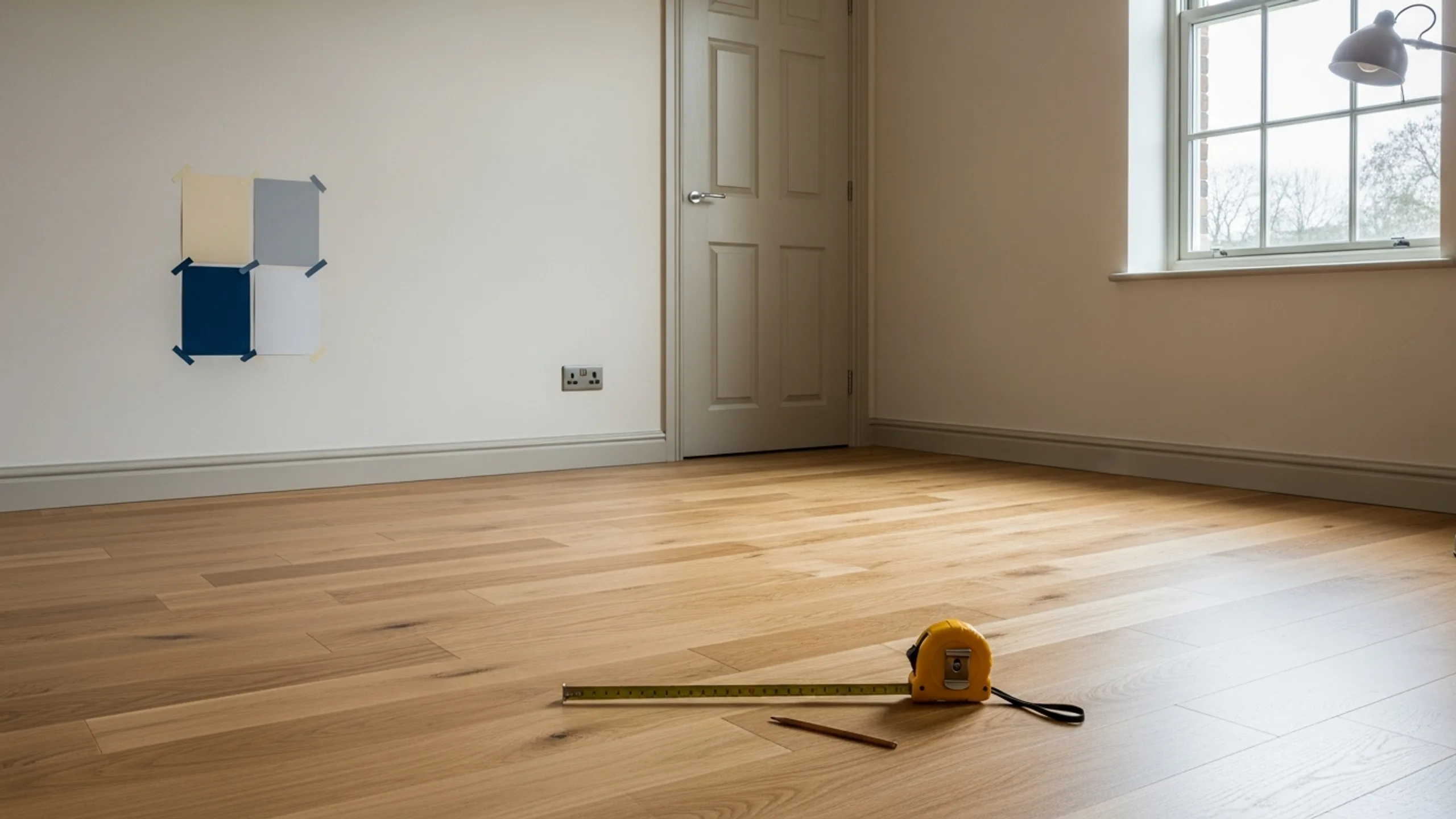
Paint. Repaint between tenants if the walls have more than light scuffing. Use the same neutral color across all units for cost efficiency. Cost: $1,500-$3,500 for full-house repaint on a single-family by a hired pro, less if you DIY. Per IRS Topic 414, interior repainting is an ordinary and necessary rental expense, deductible in the year paid.
Flooring.
- Carpet, light wear: deep clean ($150-$300 for a typical 1,200 sq ft house).
- Carpet, moderate-to-heavy wear: replace with same-grade carpet ($1.50-$3.50 per sq ft installed).
- Hardwood, light wear: buff and re-coat ($1-$2 per sq ft).
- Hardwood, severe damage: refinish ($3-$5 per sq ft) or convert to LVP ($3-$7 per sq ft installed).
The replace-vs-repair decision matters for taxes. Same-grade carpet replacement is a repair (deductible). Upgrade from carpet to hardwood is an improvement (capitalized, depreciated). See the repair vs improvement tax treatment before making the call.
Safety hardware
The non-negotiables before any tenant moves in:
- Smoke detectors. One per bedroom plus one on each floor. New 10-year sealed-battery units recommended. Cost: $20-$40 each.
- Carbon monoxide detectors. One per floor near sleeping areas. Cost: $25-$50 each.
- GFCI outlets. Kitchens, bathrooms, garages, outdoor outlets. Cost: $15-$25 per outlet, $50-$100 installed.
- Lockset rekey. Change every door, including patio. Cost: $80-$200 for a typical 4-door house.
- Window locks and screens. All windows functional. Replace torn screens: $25-$60 per screen.
- Fire extinguisher. Kitchen-grade ABC unit, in plain sight. $25-$45.
Pre-1978 lead-paint disclosure
For any rental property built before 1978, federal law requires you to disclose any known lead-based paint and provide the EPA's Protect Your Family from Lead in Your Home booklet to the tenant before lease signing. The full rules live at the HUD lead office. Penalties for non-disclosure are substantial. Add a signed lead-paint disclosure to every lease for pre-1978 properties.
For pre-1978 homes with peeling paint, EPA-certified lead-safe work practices apply during any sanding or repainting that disturbs more than 6 square feet of interior surface. The contractor doing the paint job needs the EPA RRP (Renovation, Repair, and Painting) certification.
Repairs vs improvements (the tax framing)
This is the part most landlord blogs skip. Per IRS Schedule E and IRS Publication 527, every rent-ready item falls into one of two buckets:
- Repair (Schedule E line 14, deductible in the year paid): interior painting, carpet shampoo, replacing a broken faucet, patching drywall, replacing a worn-out same-grade fixture.
- Improvement (capitalized, depreciated over 27.5 years): new flooring (carpet to hardwood), new kitchen, new bathroom, new appliances (some are 5-year property), structural additions.
The IRS BAR test (Betterment, Adaptation, Restoration) is the formal version. The practical version: if you brought something back to working condition, it is a repair. If you upgraded or rebuilt a major component, it is an improvement.
This matters because $3,000 of repairs deducts now (real cash-tax benefit this year). $3,000 of improvements deducts roughly $109 per year for 27 years. Same dollar, very different timing.
Cost-per-item summary
| Item | Typical cost range |
|---|---|
| Professional deep clean | $300-$600 |
| Full-house repaint (hired) | $1,500-$3,500 |
| Carpet clean | $150-$300 |
| Carpet replace (same grade) | $1.50-$3.50 per sq ft |
| LVP install | $3-$7 per sq ft |
| Hardwood refinish | $3-$5 per sq ft |
| Smoke detector (10-yr) | $20-$40 each |
| CO detector | $25-$50 each |
| GFCI outlet (installed) | $50-$100 each |
| Lockset rekey | $80-$200 (4-door house) |
| Window screen replacement | $25-$60 each |
| Fire extinguisher | $25-$45 |
Typical first-tenant prep budget: $1,500-$5,000 on a single-family. Add $2,000-$5,000 if flooring needs replacement.
Realistic timeline
For a typical first-tenant prep:
- Week 1. Walk the property with the inspection findings you got at close. Triage into rent-blockers, fix-now, and monitor.
- Week 2. Paint and flooring work, if needed.
- Week 3. Safety hardware install + deep clean.
- Week 4. Final walkthrough, photo documentation, listing.
If no major flooring or paint work is needed, the whole sequence can collapse to 7-10 days. Plan for 3-4 weeks the first time anyway. Pad for contractor delays. Price the delay before you accept it. At $1,600 rent, every vacant day costs about $53, so a week of contractor slippage is $370 of rent you do not get back. That is the real argument for booking trades before the tenant moves out.
Do not over-improve
This is where most first-time landlords lose money. A rental property is a financial asset that produces income. It is not a personal home. Cost-creep happens by:
- Choosing top-grade finishes that increase cost without increasing rent.
- Adding amenities the market does not pay for (designer light fixtures, smart locks).
- Doing a full renovation when the market only required clean paint and working appliances.
The baseline: spend until the property is rent-ready. Stop. The full list of common turnover mistakes walks through more, and the broader rental cost landscape covers the costs that surface AFTER move-in. If you hired a property manager, decide if a property manager handles this for you before booking contractors yourself.
Putting it together
A rental property rent ready checklist is a disciplined exercise in spending the minimum needed to make the property safe, clean, and functional. The framework: triage from the inspection report, complete the deep clean + paint + flooring track, install all safety hardware, comply with lead-paint rules for pre-1978 homes, and document everything photographically. Budget $1,500-$5,000 and 2-4 weeks for a typical first turn. Stay disciplined about the repair vs improvement distinction; it is the difference between a deduction this year and a depreciation schedule for the next 27.
If you want a structured 28-day walkthrough that turns these tasks into a calm sequence of decisions, the Real Estate Explained course covers the first-deal-to-first-tenant arc.
Frequently Asked Questions
What does rent-ready mean?
Rent-ready means the property is clean, safe, and functional enough that a tenant would sign without negotiating concessions. It sits above legal habitability (the minimum to lease) and below above-baseline (designer finishes). On a typical single-family, getting to rent-ready costs $1,500-$5,000 and takes 2-4 weeks of physical work after close.
How long does it take to make a rental rent-ready?
For a typical single-family rental, plan on 2-4 weeks. Week 1 is triage from the inspection report. Week 2 covers paint and flooring. Week 3 is safety hardware and deep clean. Week 4 is final walkthrough and listing. If no major flooring or paint is needed, the whole sequence can collapse to 7-10 days.
What should you fix before renting a house?
Fix anything that affects habitability, safety, or function: leaks, electrical issues, broken HVAC, missing smoke or CO detectors, broken locks, peeling paint, torn screens, broken appliances. Repaint walls with more than light scuffing. Replace carpet if the wear is heavy. For pre-1978 properties, deliver the EPA lead-paint disclosure before any tenant signs.
Do I need to repaint between tenants?
Not always. If the walls have only light scuffing and no visible marks, a spot-clean is enough. If marks are moderate or the previous tenant smoked, full repaint is required. Use the same neutral color across all units for cost efficiency. Interior repainting on a rental is a deductible repair in the year paid per Schedule E.
Is a deep clean required by law?
A deep clean is not federally required by law, but the property must meet the local definition of habitability before lease. Most state landlord-tenant statutes require the property to be clean and free of vermin at move-in. A professional deep clean costs $300-$600 on a typical single-family and is the safest path to meeting that threshold.
What can I deduct from a security deposit?
Damage beyond normal wear and tear, unpaid rent, and cleaning costs to return the unit to its move-in condition. You cannot deduct for faded paint, minor scuffs, or carpet worn in the traffic lanes. Deduct the repair cost rather than the price of a new item, and prorate against the item's remaining useful life.
Should I inspect before or after the tenant moves out?
Both. Do a pre-move-out walkthrough 2 to 3 weeks before the lease ends so the tenant has a chance to fix what they can, which usually reduces your make-ready scope. Then do the formal move-out inspection within 24 hours of getting the keys back, with photos.
This article is education, not financial, legal, or tax advice. Real estate carries risk, and the numbers here are examples. Check them against your own market and talk to a licensed professional before you buy.