9 Best Cities for House Hacking in 2026
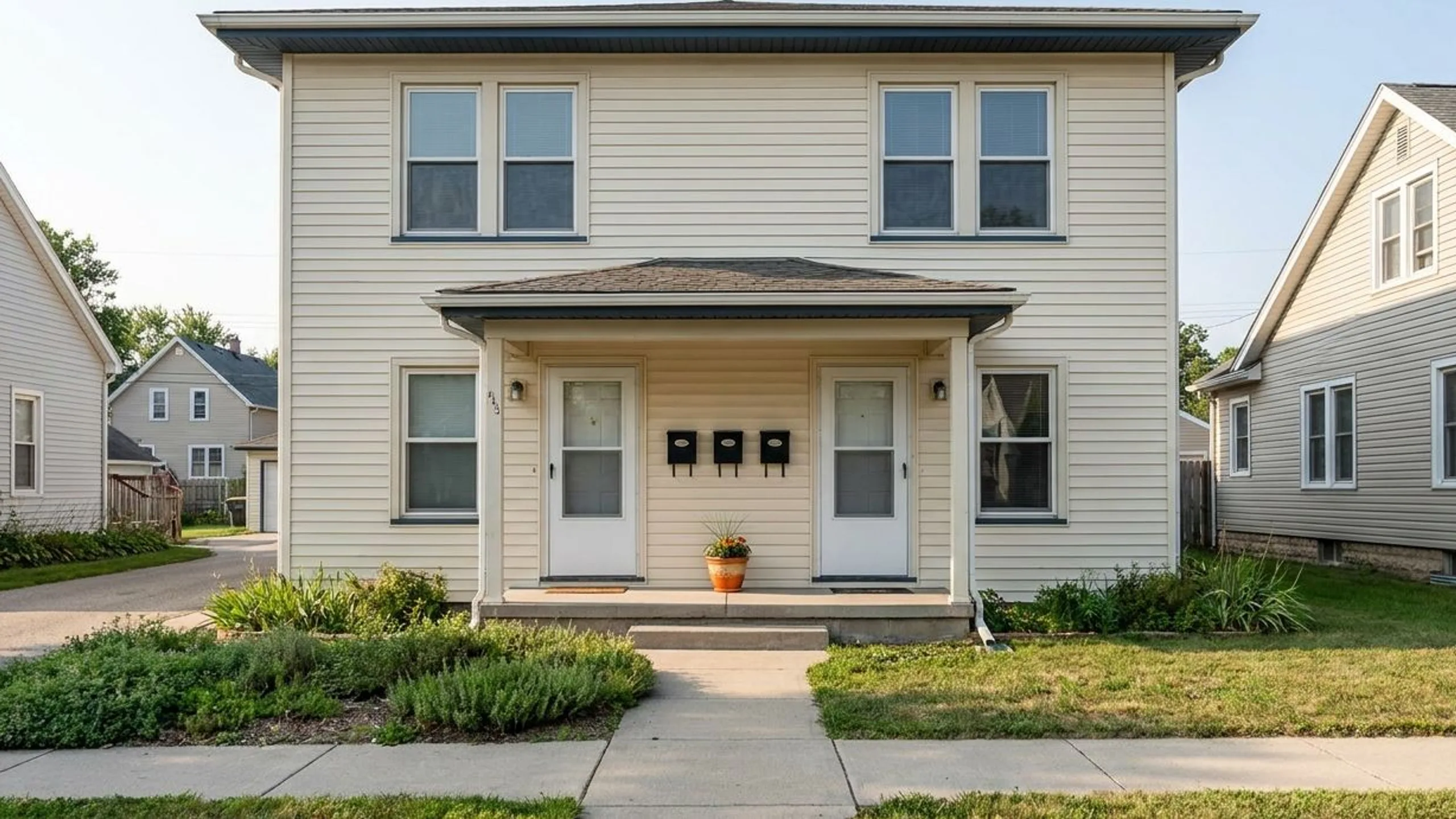
Most "best cities" lists are written for cash buyers. House hacking is different math. You're not chasing the highest cap rate in the country. You're looking for a 2-4 unit property you can buy with an owner-occupant loan (as little as 3.5% down through FHA), live in one unit, and rent out the rest to cover most or all of your mortgage.
This article is for first-time buyers who want to house hack their first property and need a shortlist of cities where the numbers actually have a shot at working: low entry prices, real multi-unit inventory, and FHA loan limits that comfortably cover what you'd need to borrow.
Key Takeaways
- House hacking works best where 2-4 unit list prices sit well under the local FHA multi-unit loan limit, leaving room for repairs and reserves.
- Midwest and Southern metros dominate this list because of older, cheaper multi-unit housing stock and modest price appreciation.
- A city on this list is a starting point, not a guarantee. Neighborhood-level due diligence still decides whether a specific property works.
- Rent covering "most" of the mortgage is the realistic first-deal target. Rent covering all of it is a bonus, not the baseline you should underwrite to.
What makes a city good for house hacking
Three things have to line up:
- Multi-unit inventory exists. A lot of U.S. metros have almost no 2-4 unit stock left. Cities built out heavily between 1900 and 1950, especially old manufacturing hubs, still have a meaningful supply of duplexes, triplexes, and fourplexes.
- Prices sit well under the FHA multi-unit loan limit for that county. For 2026, HUD's standard (non-high-cost) loan limits run up to $693,050 for a 2-unit property, $837,700 for 3 units, and $1,041,125 for 4 units. In most of the cities below, the actual purchase price is a small fraction of that ceiling, which matters more than it sounds. Room between price and limit is room for a rehab budget or a rate buy-down.
- Rent-to-price ratio is workable. Cheaper housing stock in slower-appreciation metros tends to rent for more, relative to price, than housing in hot coastal markets. That ratio is what makes the "live for free or close to it" math possible at all.
Population stability and job diversity matter too, but they matter less for a first house hack than they do for a pure cashflow rental. You're living there. You get to see, in real time, whether the neighborhood and tenant pool are what you expected, and adjust before you scale to property two.
The 9 cities
The rankings below draw on a 2026 multifamily-listing study from Lower.com, which screened active 2-4 unit listings across mid-size U.S. metros for price and inventory. We've cross-checked the pattern against Census ACS housing data and county-level FHA limits from HUD's mortgage limits lookup tool. Treat the specific prices as a snapshot, not gospel. Verify current listings and limits for your target county before you get attached to a number.
| # | City | Multi-unit stock | Median 2-4 unit list price | Est. 3.5% FHA down payment |
|---|---|---|---|---|
| 1 | Shreveport, LA | Deep, affordable | ~$115,000 | ~$4,000 |
| 2 | Montgomery, AL | Solid, underpriced | ~$140,000 | ~$4,900 |
| 3 | Peoria, IL | Moderate | ~$140,000 | ~$4,900 |
| 4 | Detroit, MI | Largest inventory by far | ~$150,000 | ~$5,250 |
| 5 | Evansville, IN | Moderate | ~$155,000 | ~$5,400 |
| 6 | Dayton, OH | Strong Rust Belt stock | ~$160,000-$180,000 | ~$5,600-$6,300 |
| 7 | Rochester, NY | Only Northeastern city on the list | ~$155,000 | ~$5,400 |
| 8 | Kansas City, MO | Moderate, strong rent growth | ~$190,000-$220,000 | ~$6,700-$7,700 |
| 9 | Birmingham, AL | Solid, undervalued | ~$165,000-$190,000 | ~$5,800-$6,700 |
Shreveport, LA and Montgomery, AL anchor the list on pure affordability. Both have deep pools of small multifamily stock left over from mid-century construction, and both sit far enough under FHA limits that a buyer has real room for a repair reserve. The trade-off is slower population growth. Don't buy here expecting appreciation; buy here for the lowest possible entry cost into your first deal.
Detroit, MI stands out for one reason: volume. Hundreds of active 2-4 unit listings at any given time means you're not competing for one of three duplexes in the whole metro. That volume comes with wide variance in property condition and neighborhood quality block to block, so this is a city where in-person diligence matters more than the spreadsheet.
Peoria, IL, Evansville, IN, and Dayton, OH are quieter Midwest metros with older multi-unit housing stock shaped by decades as manufacturing centers. Prices are modest, competition from other investors is lower than in the more-talked-about markets, and none of them show up on "hot market" lists, which is part of the appeal for a first house hack.
Rochester, NY is the one Northeastern exception. Most Northeast metros have priced multi-unit stock well past first-time-buyer range; Rochester's older housing stock and flat price trajectory keep it accessible.
Kansas City, MO and Birmingham, AL cost more than the others on this list but bring a diversified job base (healthcare, logistics, government in Kansas City; healthcare and manufacturing in Birmingham) that gives a first-time landlord a steadier tenant pool to draw from.
How to evaluate a city yourself
This list is a starting point, not a substitute for running your own numbers. A repeatable process:
- Pull the FHA limit for your target county using HUD's mortgage limits lookup tool (linked above). Confirm the 2, 3, and 4-unit ceilings, not just the single-family number.
- Pull current 2-4 unit listings for that metro and note the median price against the limit. A wide gap gives you rehab and reserve room; a narrow gap doesn't.
- Check rent comps for similar units nearby. If two of three units renting at market rate would cover 70-90% of your projected mortgage payment (principal, interest, taxes, insurance), the deal is in the workable range.
- Check the job base. One dominant employer is a risk. Two or three unrelated ones is a better sign for tenant demand holding up.
Our free house hacking calculator walks through this rent-versus-mortgage math step by step so you're not doing it in your head. If you want the full sequence, from picking a market through closing on your first house hack, the 28-day course covers city selection in week two and deal analysis in week four.
House hacking vs. buying a plain single-family home
The two paths solve different problems.
A plain single-family home is simpler to manage (one unit, one tenant relationship if you rent it later, or none if you keep living there) and usually easier to finance conventionally. But you're carrying 100% of the mortgage from day one with no rental income offsetting it.
A house-hacked 2-4 unit is more operationally complex. You're a landlord to your neighbors, coordinating repairs across more units, and dealing with tenant turnover while you live on-site. In exchange, rental income from the other units can cover most of your housing cost, which is the entire point.
For a first-time buyer trying to build equity and investing experience without carrying a full mortgage payment out of pocket, the multi-unit route usually wins on pure math. For someone who values simplicity above all else and can comfortably afford a single-family mortgage solo, the plain single-family path is a legitimate, lower-friction choice. See single-family vs. duplex for house hacking for a deeper side-by-side.
The landlord reality nobody puts on the list
Every list of "best cities" skips this part. It matters more than the ranking does.
Vacancy isn't hypothetical. Even in a strong rental market, expect turnover. Budget 5-8% of gross rent as a vacancy reserve rather than assuming full occupancy every month of the year.
Tenant screening is your first real underwriting decision. Credit check, income verification (2.5-3x rent is a common standard), and a call to a previous landlord catch most problems before they become yours. Skipping this step to fill a unit fast is one of the most common first-time landlord mistakes.
Maintenance reserves aren't optional. Older multi-unit housing stock, which is exactly what makes most of the cities above affordable, comes with older mechanical systems. A common rule of thumb is 1-2% of the property's value per year set aside for repairs and capital expenditures. On a $150,000 fourplex, that's $1,500-$3,000 a year you should already be planning for, not reacting to.
You're living next to your tenants. That's the part house-hacking content often glosses over. Boundaries, noise, and how you handle a late rent payment from someone you see in the hallway are real considerations, not footnotes. Most house hackers find it manageable. Go in with eyes open anyway.
Frequently Asked Questions
Do I have to use an FHA loan to house hack?
No, but FHA's 3.5% down payment on owner-occupied 2-4 unit properties is what makes house hacking accessible for most first-time buyers. Conventional loans can also work for owner-occupied multi-unit purchases, typically with a higher down payment (5-15% depending on the lender and unit count). See FHA vs. conventional for house hacking for the full comparison.
Do these cities still work if I can't relocate there?
Not really. House hacking requires you to occupy the property, per FHA and most conventional owner-occupant loan terms. This list assumes you're either already local to one of these metros or willing to relocate. If relocation isn't realistic, look for similar-profile cities near you using the evaluate a city yourself framework above.
How much cash do I actually need beyond the down payment?
Budget for closing costs (typically 2-5% of the purchase price), a repair reserve for anything the inspection flags, and 1-3 months of PITIA (principal, interest, taxes, insurance, association dues if any) in reserves. On a $150,000 property, that's realistically $8,000-$15,000 total cash beyond the down payment itself.
Are these prices still accurate?
Prices reflect a 2026 snapshot from listing data and shift with the market. Multi-unit inventory in particular can move fast in smaller metros. Pull current listings for your target city before making any offer, and re-verify the FHA loan limit for the specific county, since limits are set at the county level and change annually.
What if a city on this list has a bad neighborhood reputation?
City-level rankings hide enormous neighborhood-level variance, especially in a place like Detroit. A city passing the affordability and inventory filters is a reason to look closer, not a reason to buy sight unseen. Narrow to specific submarkets before you start touring properties.
Is a higher-priced city like Kansas City still worth considering over cheaper options?
Yes, if job diversity and rent growth matter more to you than minimizing upfront cash. Kansas City's broader employment base and rent growth trend can offset the higher entry price for buyers who plan to hold long-term rather than optimize purely for the lowest possible down payment.
The cheapest city to house hack in isn't automatically the best one for you. Start with the framework above, not just the ranking: confirm the FHA limit, check real listings, run the rent math, and look hard at the job base before you commit to a metro. The 28-day course walks through this exact sequence, from picking a market to closing on your first 2-4 unit property.