In this article8 sections
Cash reserves for a rental property come down to two numbers: a lump sum you hold before you buy, and a slice of rent you set aside every month after. A safe starting point for a first rental is three to six months of the full mortgage payment (PITI: principal, interest, taxes, insurance) in cash before closing, plus 20% to 30% of gross monthly rent set aside each month for vacancy, big repairs, and maintenance.
This article is for first-time landlords and soon-to-be buyers who want a real number instead of "just keep some savings." We will turn the vague advice into a formula you can run on your own deal, with dollar examples at each step. The honest reason reserves matter: a rental does not fail because of one bad month. It fails when a bad month arrives and there is no cash to absorb it.
Key Takeaways
- Hold 3 to 6 months of PITI in cash before you close. On a $1,600 monthly payment, that is $4,800 to $9,600 per property.
- Set aside 20% to 30% of gross rent every month, split across vacancy, capital expenditures (CapEx), and repairs.
- Reserves are separate from your down payment and separate from your personal emergency fund. Do not count the same dollar twice.
- The most expensive surprise is a big-ticket replacement. A new HVAC system averages about $7,500, so a $50 per month maintenance line is not a reserve.
- Older properties and single units need larger reserves than newer properties or a small portfolio that spreads risk.
Reserves are not your down payment
A lot of beginners save up exactly enough for the down payment and closing costs, buy the property, and start from zero cash. That is the setup for a forced sale.
Your reserve is a separate pile of money you do not spend at closing. It sits in the bank after you own the property, waiting for the first vacancy, the first repair, or the first month a tenant pays late. If you need a refresher on the purchase cash itself, see how much down payment you need for an investment property. Reserves come on top of that. Sizing the turnover line is easier with the rent-ready property checklist.
One more separation: your personal emergency fund (your own housing, groceries, your car) is not the same as your rental reserve. Mixing them means one bad event drains both. Keep them in different accounts.
What cash reserves actually cover
Reserves exist to cover the costs that do not arrive on a monthly schedule. There are three big ones, plus a buffer for the mortgage itself.
Vacancy. No tenant means no rent, but the mortgage, taxes, and insurance still come due. Nationally the rental vacancy rate ran 7.3% in early 2026 per the U.S. Census Bureau housing vacancy data, so budgeting for roughly one empty month a year is realistic, not pessimistic.
Capital expenditures (CapEx). These are the big component replacements: roof, furnace, air conditioner, water heater, windows. They do not happen often, but they are expensive when they do. Replacing an HVAC system averages about $7,500, and even a water heater runs about $1,345. A reserve is what turns those from a crisis into a line item.
Repairs and maintenance. The smaller, more frequent stuff: a leaking faucet, a broken garbage disposal, a service call. Routine, but constant.
A mortgage buffer. On top of the three above, you want enough cash to pay PITI for several months if rent stops entirely during a long vacancy, a bad tenant, or an eviction. Reserves are one of the three pieces of cash to close, alongside the down payment and closing costs. Our 50-metro study of the cash needed for a first rental breaks all three out for every large market.
For the full list of quiet costs that catch beginners, see the hidden costs of owning a rental property.
How much to hold upfront
The upfront reserve is measured in months of PITI. The range that keeps most first-time landlords safe:
- Minimum: 3 months of PITI. Enough to survive a normal vacancy plus one moderate repair.
- Comfortable: 6 months of PITI. Enough to survive a vacancy that overlaps with a big repair, or a slow eviction.
Why measure in PITI and not rent? Because PITI is the bill that does not stop when the rent stops. If your payment is $1,600 a month, a 6-month reserve is $9,600 sitting in cash before you consider the property safe to own.
This matters because surprise expenses are common and most people are not ready for them. The Federal Reserve found that only 63% of adults could cover a $400 emergency with cash, which means more than a third could not. A rental turns you into the person who has to cover the $400 (and sometimes the $4,000) on demand.
How much to set aside each month
The upfront lump sum gets you to the starting line. The monthly set-aside keeps the reserve full as you spend from it. Think of it as three percentages of gross rent:
| Bucket | Set-aside | On $2,000 rent |
|---|---|---|
| Vacancy | 5% to 8% | $100 to $160 |
| CapEx | 5% to 10% | $100 to $200 |
| Repairs and maintenance | 5% to 8% | $100 to $160 |
| Total reserve | 15% to 26% | $300 to $520 |
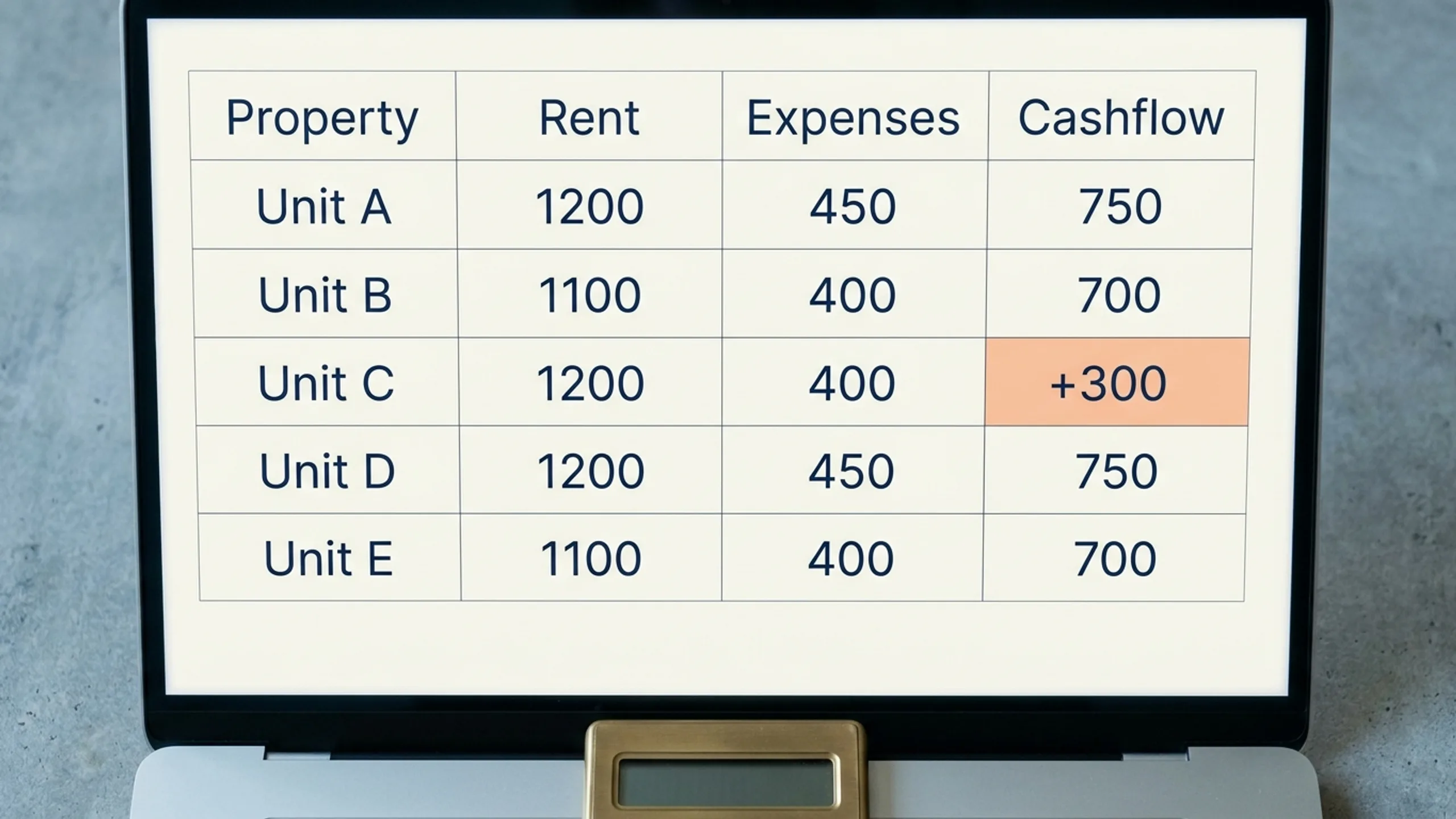
So on a $2,000 rental, plan to move roughly $300 to $520 a month into reserves, on top of the mortgage. That is the number most beginner spreadsheets are missing, and it is why a property that looks like it "cashflows $250" on a simple calculator can actually run flat or negative once reserves are honest.
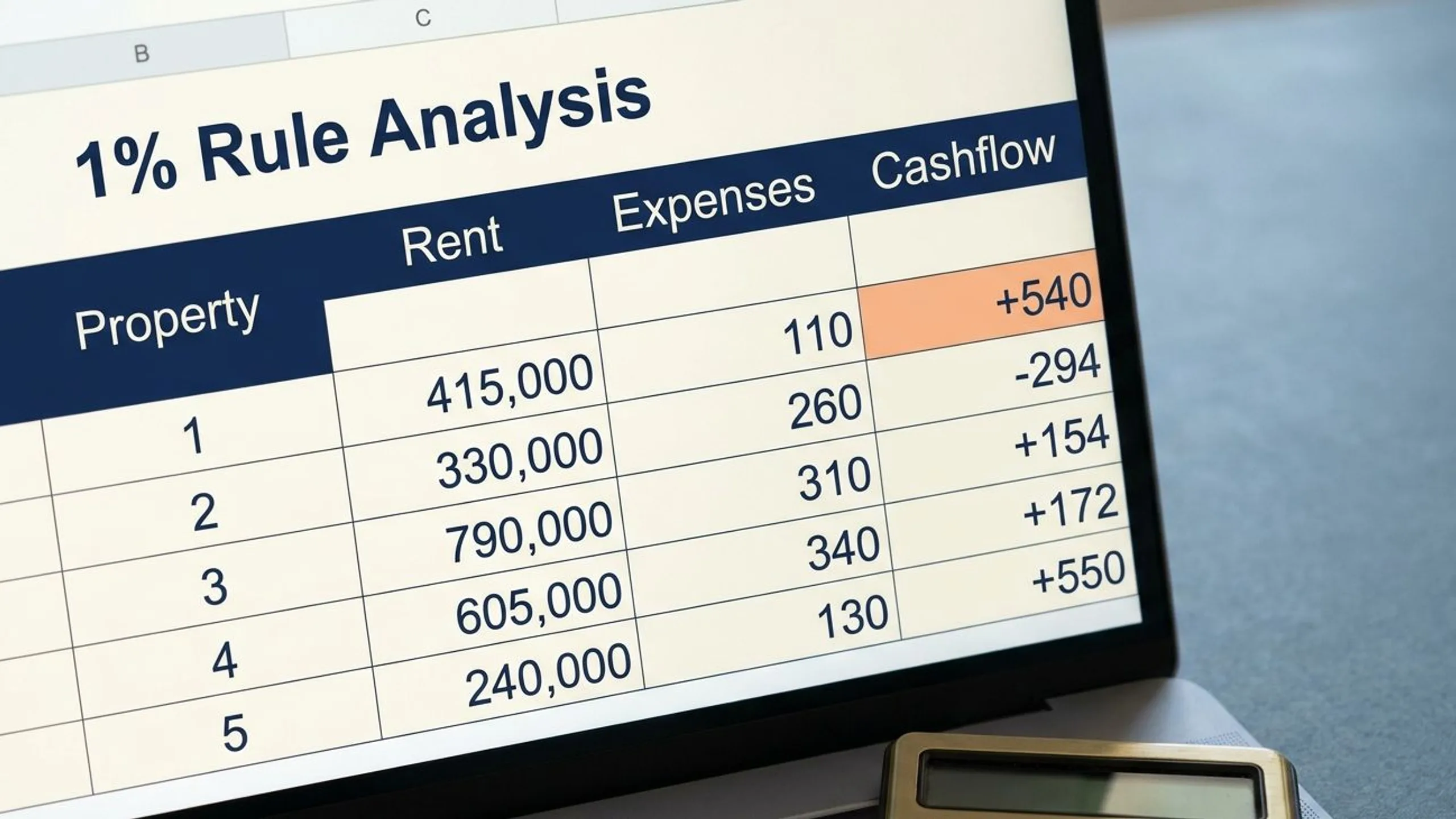
This lines up with the 50% rule, the rough guide that operating costs eat about half of gross rent over time. See the 1% rule and 50% rule explained for how that sanity check works, and how to calculate NOI for the full line-item model these set-asides live inside.
Where to keep your reserves
Reserves need to be safe and reachable, not invested. Two rules:
- Separate account. A dedicated high-yield savings account per property (or per portfolio) so you always know the reserve balance at a glance and never confuse it with spending money.
- Liquid, not locked. Not stocks, not the property equity. When the furnace dies in January, you need cash that week, not a loan application or a stock sale at a bad time.
A high-yield savings account is the standard home for reserves. It earns a little, stays liquid, and keeps the money mentally off limits.
How new vs old changes the number
The ranges above are a starting point. Move up or down based on risk.
Hold more when:
- The property is older (pre-1980) or the roof, HVAC, and water heater are near end of life.
- You own only one property, so a single event hits your whole portfolio.
- The local market has higher vacancy or slower re-leasing.
You can hold slightly less when:
- The property is newer or was recently renovated with new major systems.
- You own several units, so risk is spread and rarely hits everything at once.
- You have a separate personal emergency fund that could backstop a true disaster.
A brand-new roof and furnace genuinely lower your near-term CapEx risk. A 25-year-old roof raises it. Reserve sizing should reflect the actual condition of the actual house, not a generic rule.
A full worked example
Say you buy a single-family rental:
- Rent: $2,000 per month
- PITI: $1,500 per month
- Age: 1995 build, original HVAC
Upfront reserve: 6 months of PITI = $9,000 in cash at closing, held separately from the down payment.
Monthly set-aside: the HVAC is near end of life, so lean to the high end of CapEx.
- Vacancy 7%: $140
- CapEx 10%: $200
- Repairs 7%: $140
- Total: $480 per month into the reserve account.
What this buys you: when the 28-year-old HVAC fails in year two and the bill is $7,500, you have been setting aside $200 a month for CapEx (about $4,800 saved) plus a $9,000 upfront cushion. You write the check, refill the reserve over the next several months, and never miss a mortgage payment. The tenant never knew anything happened. That is the entire point of reserves.
Skipping this step is one of the most common and most expensive beginner errors. See first-time landlord mistakes for the others.
Frequently Asked Questions
How much cash reserve should I have for a rental property?
Hold 3 to 6 months of the full mortgage payment (PITI) in cash before closing, then set aside 15% to 30% of gross monthly rent afterward for vacancy, CapEx, and repairs. On a $1,500 PITI with $2,000 rent, that is roughly $4,500 to $9,000 upfront and $300 to $520 per month.
Are reserves the same as my down payment?
No. The down payment and closing costs are what you spend to buy the property. Reserves are a separate pile of cash you keep after closing to cover vacancy, repairs, and the mortgage during no-rent months. Counting the same dollars as both leaves you with zero cushion on day one.
How many months of reserves do lenders require?
Many conventional investment-property loans require about 6 months of PITI in reserves per financed property, and some require more once you own several. Even when a lender asks for less, 6 months is a sensible personal target for a first rental. Confirm the exact figure with your loan officer during pre-approval.
Should I keep reserves in the stock market to earn more?
No. Reserves need to be liquid and stable, so a high-yield savings account is the right home. Money in stocks can be down 20% the exact month you need it for a new roof, which forces you to sell at a loss or borrow. Keep reserves boring on purpose.
What is the biggest expense reserves protect against?
Capital expenditures, the big component replacements. A roof, furnace, or air conditioner can each cost several thousand dollars, and a full HVAC system averages about $7,500. These are rare but unavoidable, and a small monthly maintenance line will never cover them. That is what the CapEx reserve is for.
Can I lower my reserves if I own multiple properties?
Somewhat. A larger portfolio spreads risk, so it is unlikely every property needs a major repair in the same month. Many investors hold a shared reserve sized to their total monthly payments rather than a full 6 months on every single door. A first-time landlord with one property has no such cushion and should stay conservative.
Reserves are the quiet difference between a landlord who sleeps fine during a vacancy and one who panics. Size them before you buy, keep them separate, and refill them after every hit. If you want the full step-by-step system for buying your first rental with the numbers done right, the 28-day course walks through reserves, underwriting, and financing in order.
This article is education, not financial, legal, or tax advice. Real estate carries risk, and the numbers here are examples. Check them against your own market and talk to a licensed professional before you buy.