In this article5 sections
How to choose a real estate investing course comes down to one rule: judge it on process, not promises. The information in any course is available free somewhere, so what you are really buying is a clear sequence, real tools, and honest guidance. A course worth paying for sells structure and mistake avoidance. A course to avoid sells guaranteed returns and urgency. The seven checks below sort one from the other before you spend a dollar.
This article is for beginners comparing real estate investing courses and trying not to waste money on hype. We will walk through the seven things a good course has, the red flags of a scam, whether you even need a paid course, and how to match one to your strategy.
Key Takeaways
- Judge a course on process, not promises. Structure, tools, and honesty beat inspiration every time.
- The seven checks: sequence, real tools, honest numbers and risk, action-first, matched to your stage, transparent pricing, and no guarantees.
- Biggest red flag: any promise of guaranteed returns, income, or a get-rich timeline. Real estate carries risk, and honest courses say so.
- The best course for you is matched to your strategy (for many beginners, house hacking) and leaves room in your budget for reserves.
- Not sure you need one yet? Read whether a real estate course is worth it first.
The 7 checks before you pay
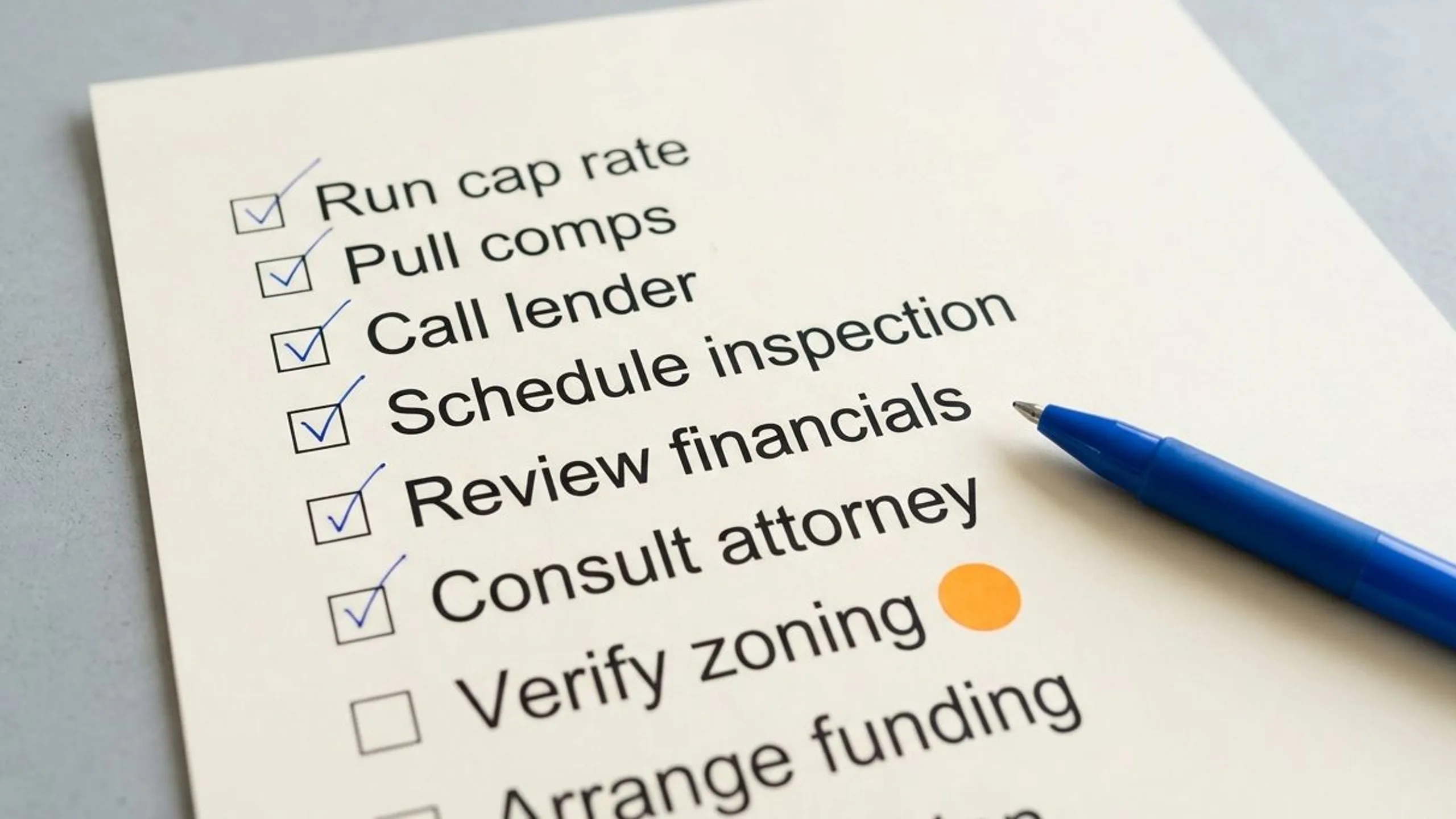
Run any course, including ours, through these seven checks.
- A clear sequence, not a content dump. The order you do things in is the real product. Look for a defined path from zero to first-deal readiness, not a library of disconnected videos.
- Real tools. Calculators, checklists, and templates turn a concept into a decision. A course that hands you a house hacking calculator and a deal checklist beats one that only hands you lectures.
- Honest numbers and risk. Good courses use specific figures and real examples, and they name the downside. If risk is never mentioned, the course is selling a feeling, not a skill.
- Action-first. Daily or step-by-step tasks that build something (a buy box, a market shortlist, a filled-in analysis) beat passive watching. You want to finish the course with work done, not just notes taken.
- Matched to your stage. A beginner needs a beginner course. If the sales page is aimed at people scaling a portfolio, it will skip the foundations you actually need.
- Transparent pricing and refund policy. A clear price, a stated refund window, and no surprise upsells are basic signs of an honest operation.
- No guarantees. This is the big one. The moment a course promises a return, an income, or a timeline to wealth, the price stops mattering because the claim is dishonest.
If a course clears all seven, it is at least honest. Whether it is worth the price is a separate question of budget and fit, covered below.
Red flags that a course is a scam
Some courses are not thin, they are predatory. The pattern is consistent:
- Guaranteed returns or income. No one can promise this. Real estate values and rents move with the market.
- Get-rich-fast timelines. Building through real estate is slow by design. Anyone compressing it into weeks is selling a fantasy.
- Fake urgency. Countdown timers, "only 3 spots left," and expiring discounts are pressure tactics, not real scarcity.
- Lottery-style testimonials. Screenshots of huge, fast profits with no context are marketing, not evidence.
- Endless upsells. A reasonable price that turns into a funnel of "mastermind" and "inner circle" add-ons is a warning sign.
These matter more because most buyers cannot absorb the loss. The Federal Reserve found that only 63% of adults could cover a $400 emergency with cash, so money lost to a hype course is money that is genuinely hard to replace. Protect it by judging the pitch before the price.
Do you even need a paid course?
Sometimes the honest answer is no. If your question is a single fact, free content answers it. If you already have a trustworthy sequence and the tools to run a deal, you may not need a course at all. What a course sells is structure for people who have been consuming content for months and still cannot name their next step.
The real reason to invest in a good course is not the price, it is the cost of the alternative. Choosing the wrong market or overpaying is a five- or six-figure mistake: the national median home value is about $332,700, while some affordable metros sit near $102,000, so a bad market decision dwarfs any reasonable course fee. A course earns its price when it keeps you from that mistake. For the full argument, see whether a real estate course is worth it.
Match the course to your strategy
The best course is not the most expensive or the most hyped, it is the one that fits the path you will actually take. For a lot of first-time investors with limited cash, that path is house hacking, because FHA financing lets you buy a small multi-unit with as little as 3.5% down while living in one unit.
If that sounds like you, a good course should teach the full sequence: strategy selection, picking a market, financing, deal analysis, and closing, in that order. Start with the free basics in house hacking for beginners to see whether the strategy fits before you pay for a deeper program.
Frequently Asked Questions
How do I choose a real estate investing course?
Judge it on process, not promises. Look for a clear sequence, real tools like calculators and checklists, honest coverage of risk, action steps rather than lectures, content matched to your stage, and transparent pricing. If the pitch leans on guaranteed returns or urgency, walk away.
What should a good real estate investing course include?
A defined path from zero to first-deal readiness, real tools (calculators, checklists, templates), specific numbers and examples, honest downside coverage, and daily or step-by-step tasks. A course that is all inspiration and no process teaches you to feel ready without being ready.
How do I know if a real estate course is a scam?
The tells are in the pitch: guaranteed returns or income, get-rich-fast timelines, fake countdown timers and scarcity, testimonials that read like lottery wins, and endless upsells after you buy. Honest courses sell structure and mistake avoidance and are upfront that real estate carries risk.
Should a beginner take a real estate course or learn for free?
It depends on what you are missing. If you lack a trustworthy order of operations and want tools and accountability, a course can be worth it. If you only need a specific fact, free content answers it. See our honest breakdown of whether a real estate course is worth it before you spend anything.
What is the best real estate investing course for beginners?
There is no single best course for everyone. The right one is matched to your strategy (for many beginners, house hacking), sells a clear process rather than promises, and fits your budget with room left for reserves. Use the checks in this guide to judge any course, including ours, on its merits.
Choosing a real estate investing course is really an exercise in filtering out hype. Use the seven checks, watch for the scam red flags, and match the course to the strategy you will actually pursue. If you want a sequenced, beginner-first path from zero to first-deal readiness with real tools and honest risk coverage, that is what our 28-day course is built to be. If you are not sure you are there yet, grab the free strategy guide and start with the fundamentals.
This article is education, not financial, legal, or tax advice. Real estate carries risk, and the numbers here are examples. Check them against your own market and talk to a licensed professional before you buy.